
Singapore's automotive industry is evolving fast, and safety standards are evolving with it. Therefore, every workshop owner needs a clear picture of what personal protective equipment (PPE) their team actually requires. Otherwise, technicians face unnecessary risk, and businesses face compliance gaps. In this guide, we break down the essential PPE for each type of automotive work, so you can build a safer, more compliant workshop from day one.
What PPE is needed in the automotive industry?
Not every worker needs every item. The correct selection should follow a task-specific risk assessment, product information, the chemical safety data sheet (SDS) and the conditions in the actual workplace.
Why PPE Matters in Singapore's Automotive Industry
- Flying metal, rust, dust and fragments
- Oils, fuels, coolants, brake fluids, solvents, paints and cleaning chemicals
- Sharp edges, hot components and rotating equipment
- Welding radiation, sparks, fumes and molten metal
- Hazardous noise from impact tools, compressors, presses and testing equipment
- Vehicle movement and falling components
- Tyre inflation and stored-pressure hazards
- Battery electrolyte, electrical energy and thermal events
- Awkward access, wet floors and work at height
PPE forms the final barrier; it does not make an uncontrolled task safe. Under Singapore’s Workplace Safety and Health (Risk Management) Regulations, duty holders must identify hazards and reduce risks using the hierarchy of control. Suitable PPE is one control within that hierarchy.
The Ministry of Manpower’s [risk management guidance also calls for risk assessment of routine and non-routine work, including repair and maintenance. Workshops should therefore prioritise measures such as vehicle isolation, machine guarding, local exhaust ventilation, safe lifting equipment, traffic separation and lock-out procedures before relying on PPE.
| Task or hazard | PPE to consider | Main selection points |
|---|---|---|
| General mechanical repair | Safety glasses, task-specific gloves, safety footwear and suitable workwear | Flying particles, sharp edges, oil exposure, grip, fit and entanglement risk |
| Work beneath a raised vehicle | Eye protection, safety footwear and head protection where required by the assessment | Falling dirt or parts, overhead contact and compatibility with creepers or access equipment |
| Grinding, cutting and drilling | Safety glasses or goggles plus a face shield, hearing protection, suitable gloves and protective clothing | Impact rating, spark exposure, noise, tool control and nearby flammable substances |
| Welding and hot work | Welding helmet, safety glasses, welding gloves, flame-resistant clothing and hearing protection as required | Welding process, filter shade, radiation, sparks, fumes and fire risk |
| Spray painting and paint mixing | Suitable respirator, goggles or face protection, chemical-resistant gloves and protective clothing | Paint system, isocyanates or solvents, concentration, ventilation and supplier information |
| Degreasing and chemical cleaning | Chemical goggles or face shield, chemical-resistant gloves, apron or protective clothing and suitable footwear | Exact chemical, concentration, splash direction, permeation and safety data sheet instructions |
| Battery work | Chemical goggles and face shield, chemical-resistant gloves and apron; electrical PPE where applicable | Battery chemistry, electrolyte splash, short circuit, voltage and emergency arrangements |
| EV or hybrid high-voltage work | Voltage-rated insulating gloves with protectors, eye and face protection, electrical protective footwear and arc-rated PPE where required | Vehicle procedure, voltage class, test dates, glove inspection, arc risk and proven isolation |
| Tyre servicing and inflation | Eye and face protection, hearing protection, safety footwear and task-specific gloves | Stored energy, restraint devices, inflation procedure and damaged wheel components |
| Vehicle movement or roadside work | High-visibility clothing, safety footwear and task-specific head or eye protection | Traffic routes, lighting, weather, reversing and separation from moving vehicles |
| High-noise work | Earplugs or earmuffs selected according to the noise assessment | Measured exposure, required attenuation, fit, communication and compatibility |
This table is a starting point only. A competent person should assess each workplace, vehicle type, substance and work method.
Core PPE for General Workshop and Mechanical Work
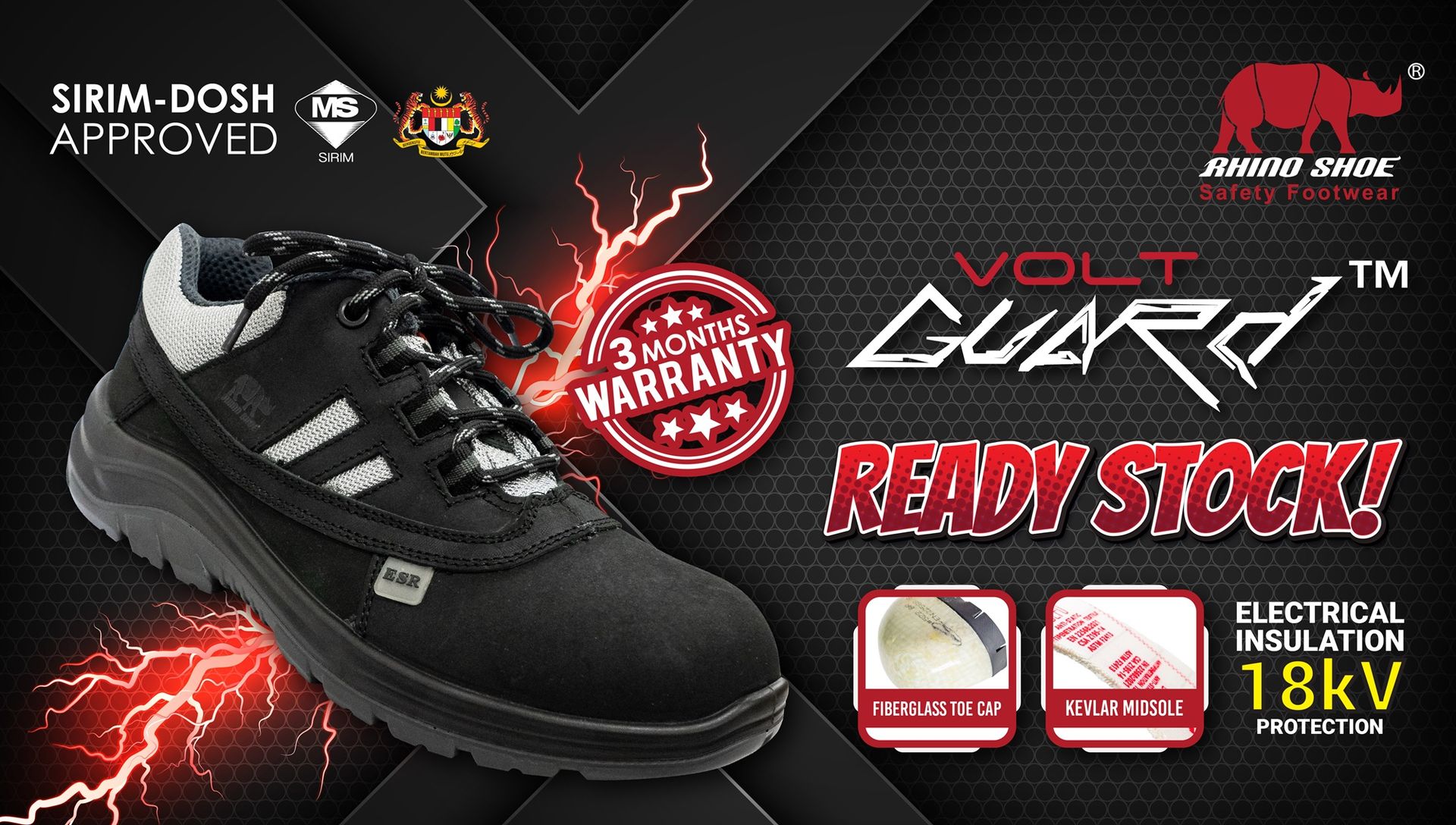
- Safety shoes – Steel or composite toe caps protect against dropped tools and heavy parts.
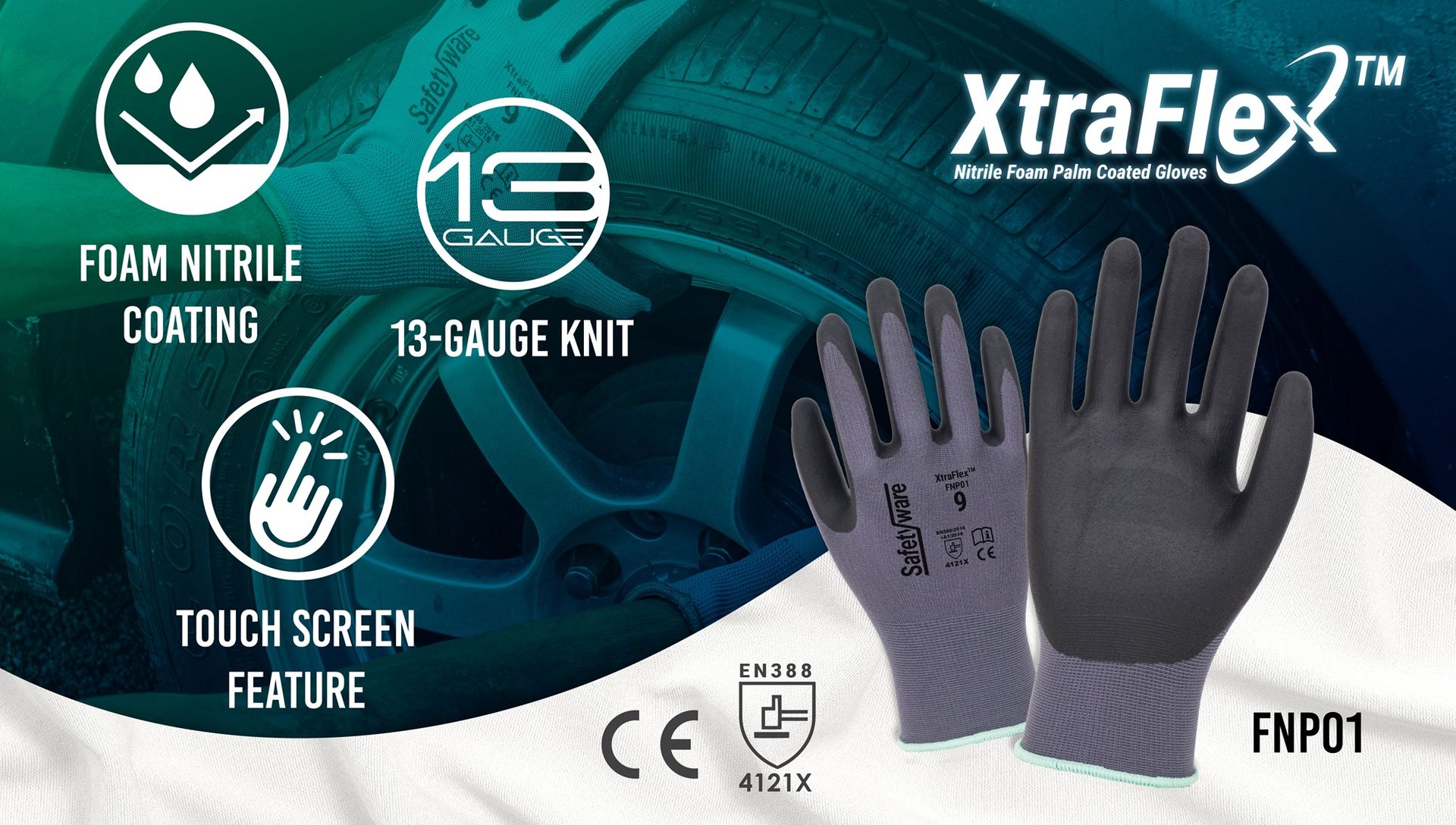
- Cut-resistant gloves – These reduce the risk of lacerations during disassembly and repair work.
- Safety glasses or goggles – Essential during grinding, brake cleaning, and fluid handling.
- Coveralls or work overalls – These shield skin and clothing from oil, grease, and sharp edges.
- Ear protection – Necessary when operating pneumatic tools or working in noisy bays.
Moreover, technicians working under vehicles or on lifts should also wear knee pads and, where overhead hazards exist, bump caps. Similarly, impact-rated footwear adds extra protection during heavy lifting tasks.
PPE for Spray Painting and Bodywork
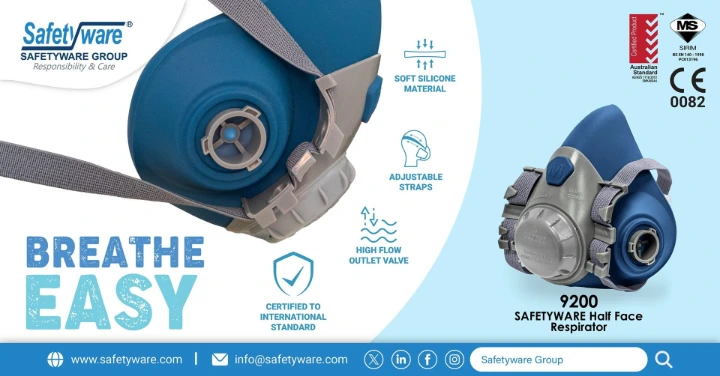
- Respirators with organic vapour cartridges – Ideally rated for isocyanates used in 2K paints.
- Chemical-resistant gloves – These prevent skin contact with solvents and paint chemicals.
- Disposable coveralls – Tyvek-style suits keep overspray off skin and clothing.
- Sealed eye protection – Goggles that block fumes work better than standard safety glasses here.
In addition, workshops should ensure adequate ventilation in spray booths. Otherwise, even the best PPE cannot fully offset poor air quality.
PPE for Welding and Grinding
- Welding helmets – Choose the correct lens shade for the specific welding process used.
- Fire-resistant gloves and aprons – These protect against sparks, heat, and molten metal.
- Face shields – Worn over safety glasses, these guard against flying debris during grinding.
Notably, many workshop injuries in this category happen when technicians skip face protection for "quick" grinding jobs. Because of this, supervisors should enforce PPE use consistently, regardless of task duration.
PPE for EV and Hybrid Vehicle Technicians
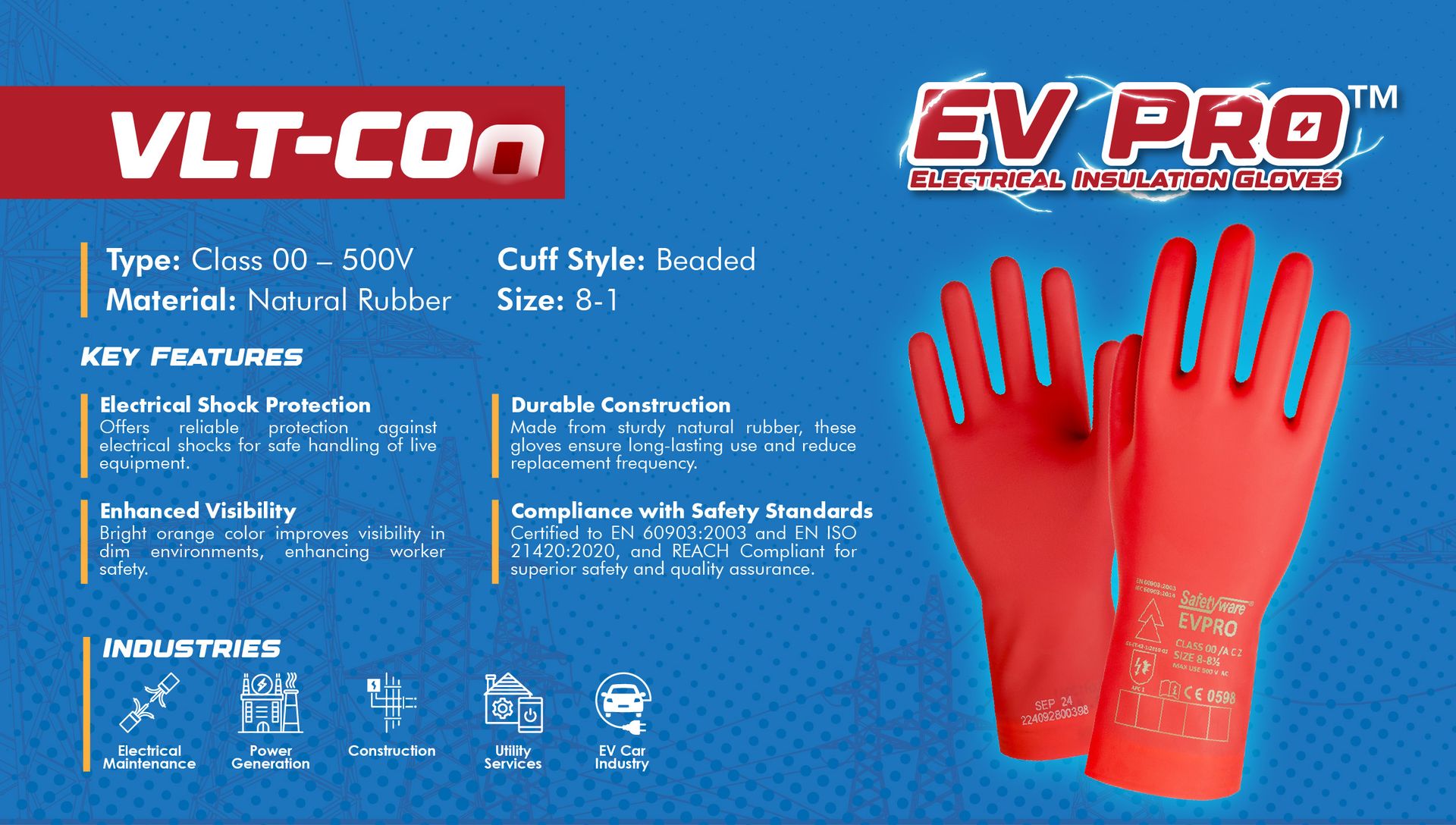
- Insulated rubber gloves (Class 0 or higher) – Paired with leather over-gloves for mechanical protection.
- Insulated footwear – This prevents electrical current from passing through to the ground.
- Arc-rated face shields and clothing – Required where high-voltage exposure risk exists.
- Non-conductive tools – These complement PPE rather than replace it.
Importantly, technicians should never work on EV battery systems without proper lock-out/tag-out (LOTO) training. Otherwise, insulated PPE alone cannot fully eliminate the risk of electric shock. As a result, EV-focused PPE training has become one of the fastest-growing needs among Singapore workshops today.
PPE for Battery Handling
- Chemical splash goggles – These protect eyes from acid exposure during handling.
- Acid-resistant gloves and aprons – Essential when working with lead-acid batteries.
- Respiratory protection – Needed if battery off-gassing occurs in enclosed spaces.
How to choose automotive PPE in Singapore
8. Review the decision. Reassess after an incident, vehicle or chemical change, new equipment, worker feedback or evidence that controls are ineffective.
Common automotive PPE mistakes
- Keeping damaged, expired or untested PPE in circulation
Automotive workshop PPE checklist
- Is emergency PPE available, compatible and ready to use?
Get Expert Help Choosing the Right PPE
Reach out today, and we'll help you build a safer, more compliant workshop from the ground up.
Frequently asked questions
Here are some common questions about essential PPE for the Automotive Industry in Singapore.
Singapore's WSH Act requires employers to assess workplace hazards and provide suitable PPE accordingly. Consequently, requirements vary by task, ranging from basic safety footwear to insulated EV gear.
For general mechanical work, suitable eye protection, task-specific gloves, safety footwear and close-fitting workwear are common starting points. Hearing, respiratory, face, head or chemical protection may be required for particular tasks. The workshop’s risk assessment should set the final requirements.
No. Gloves can protect against cuts, dirt, chemicals, heat or electricity when correctly selected, but they can become caught in rotating equipment. Workers should follow the machine instructions and task assessment and never wear unsuitable or loose gloves near entanglement hazards.
Yes, EV technicians need insulated gloves, insulated footwear, and arc-rated clothing. Otherwise, they face serious electric shock risks when working on high-voltage battery systems.
Requirements depend on the vehicle, system voltage, task and risk assessment. High-voltage work may require tested insulating gloves with protectors, eye and face protection, electrical footwear and arc-rated clothing. PPE must be combined with training, isolation, verified absence of voltage and manufacturer-approved procedures.
There is no universal interval. Replace PPE when it is damaged, contaminated, expired, no longer fits or fails the manufacturer’s inspection criteria. Some equipment—including electrical insulating gloves, respirator components and fall-protection equipment—also needs defined testing, servicing or inspection schedules.
No, PPE works best alongside proper training, risk assessments, and safe work procedures. Otherwise, compliance gaps can still occur even with good equipment on hand.
Build a safer automotive workplace
Important: This article provides general information, not legal, electrical or site-specific safety advice. Always follow current Singapore legislation, vehicle and equipment manufacturer instructions, safety data sheets, applicable standards and a competent workplace risk assessment.