
How to Choose Safety Shoes for Different Industries in Singapore
Safety shoes play an important role in protecting workers from workplace hazards. However, not every pair suits every job. Different industries expose workers to different risks. Therefore, choosing the right safety footwear helps reduce injuries, improve comfort, and increase productivity.
In Singapore, employers must provide suitable personal protective equipment for workers who face occupational hazards. As a result, selecting safety shoes should always match the actual work environment instead of focusing only on price.
This guide explains how to choose safety shoes for different industries in Singapore and highlights the key features every employer and worker should consider.
Why Choosing the Right Safety Shoes Matters
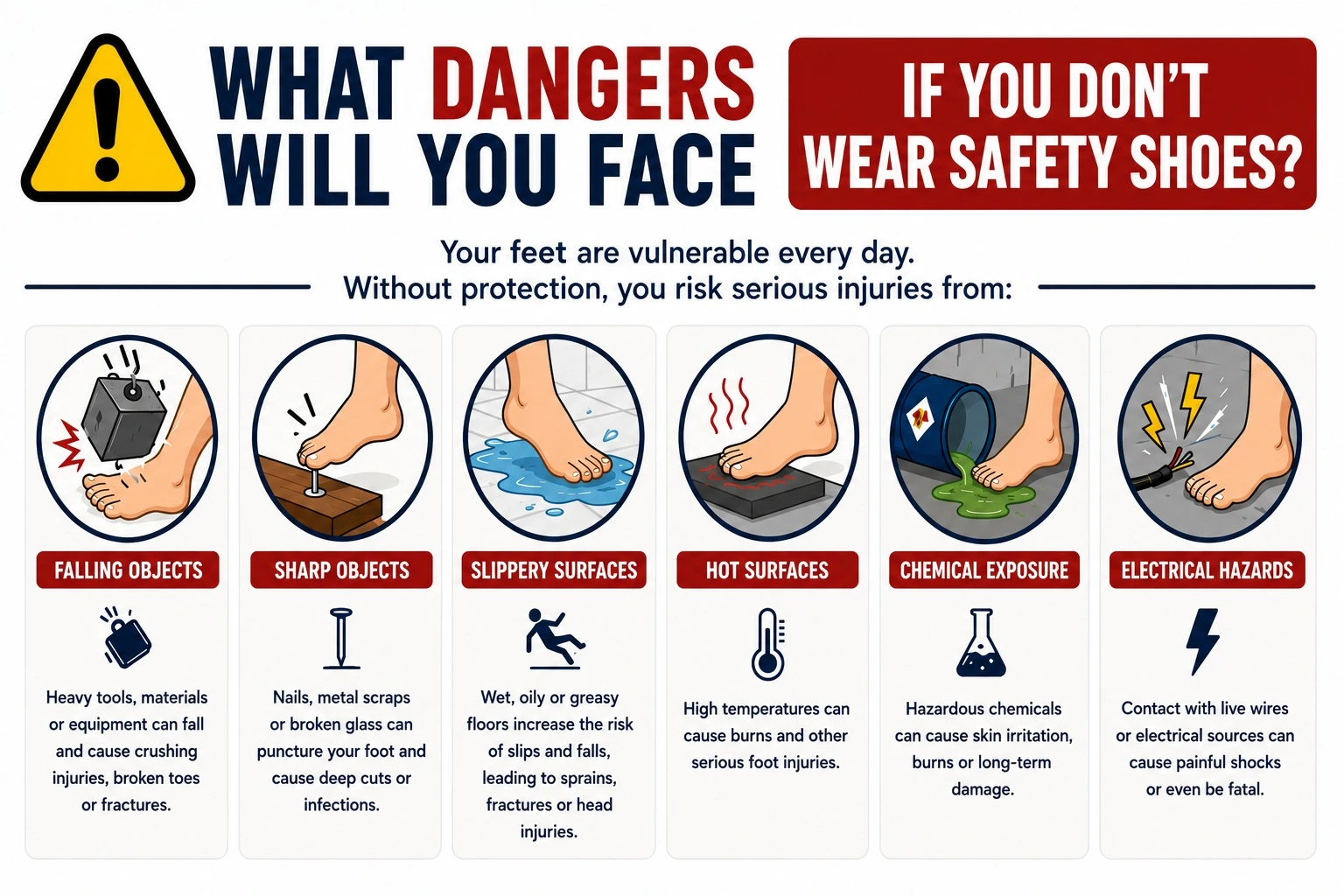
Furthermore, quality safety footwear supports compliance with workplace safety practices and contributes to a safer working environment.
Understand Your Workplace Hazards First
- Are heavy objects likely to fall?
- Are floors wet or oily?
- Is there a risk of stepping on sharp objects?
- Does the workplace involve electrical hazards?
- Are workers exposed to high temperatures?
- Do employees stand or walk for long hours?
Once you understand these risks, selecting suitable footwear becomes much easier.
Safety Shoes for Different Industries
Construction Industry
- Excellent slip resistance on rough surfaces
- Durable rubber outsole for demanding environments
- Heat-resistant outsole for hot working conditions
- Protective toe cap against heavy impacts
- Penetration-resistant midsole to reduce puncture injuries
- Suitable for outdoor and heavy-duty applications
- Building construction
- Civil engineering
- Infrastructure projects
- Mechanical installation
Manufacturing Industry
- Lightweight design reduces leg fatigue
- Comfortable cushioning for extended wear
- Good shock absorption
- Slip-resistant outsole
- Suitable for indoor industrial environments
- Protective toe cap for daily workplace hazards
- Manufacturing plants
- Electronics factories
- Precision engineering
- Assembly production lines
Warehouse and Logistics
- Lightweight construction for all-day comfort
- Flexible sole supports frequent walking
- Slip-resistant outsole
- Comfortable cushioning reduces foot fatigue
- Durable enough for daily warehouse operations
- Distribution centres
- Warehouses
- Logistics hubs
- E-commerce fulfilment centres
Food and Beverage Industry
- Waterproof construction
- Easy to wash and sanitise
- Excellent protection against water and cleaning chemicals
- Slip-resistant outsole for wet surfaces
- Ideal for hygienic working environments
- Food processing facilities
- Commercial kitchens
- Beverage manufacturing
- Seafood processing plants
Oil, Gas and Chemical Industry
- Waterproof protection for wet workplaces
- Good resistance to oils and workplace contaminants
- Slip-resistant outsole
- Durable construction for harsh environments
- Reliable foot protection in demanding industrial conditions
- Oil and gas facilities
- Chemical plants
- Petrochemical industries
- Wastewater treatment plants
Marine and Shipyard Industry
- High slip resistance on wet surfaces
- Durable outsole for heavy-duty work
- Excellent grip on steel flooring
- Protective toe cap and puncture-resistant midsole
- Suitable for outdoor industrial environments
- Shipyards
- Offshore platforms
- Ports and harbours
- Marine engineering facilities
Agriculture and Landscaping
- Waterproof
- Easy to clean after outdoor work
- Protects feet from mud and standing water
- Slip-resistant outsole
- Suitable for all-weather conditions
- Farms
- Plant nurseries
- Landscaping projects
- Municipal maintenance
Key Safety Shoe Features to Compare
High-quality materials provide longer service life and better value.
Choose Safety Shoes That Meet Recognised Standards
Moreover, selecting certified products demonstrates a stronger commitment to workplace safety.
Partner with a Trusted Safety PPE Supplier
At Safetyware Singapore, we offer a comprehensive range of safety shoes designed for construction, manufacturing, logistics, marine, engineering, food processing, and many other industries. Our team helps businesses identify suitable products that balance protection, comfort, and durability.
Contact Our Sales Team
Whether you require safety shoes for a small business or a large industrial project, we are here to assist you.
Frequently Asked Questions (FAQ)
Safety shoes protect workers from impact injuries, punctures, slips, electrical hazards, and other workplace risks. They also improve overall workplace safety.
Industries such as food processing, hospitality, healthcare, logistics, and manufacturing commonly require slip-resistant safety footwear because wet or oily floors increase slipping hazards.
The lifespan depends on working conditions and usage frequency. However, wearers should inspect safety shoes regularly and replace them when they show signs of wear or damage.
Yes. Many modern safety shoes combine lightweight materials with certified protective features, providing both comfort and reliable protection.
Consider workplace hazards, comfort, sole grip, protective toe cap, penetration resistance, durability, and compliance with recognised safety standards.
Choose a size that provides adequate toe room without excessive movement. Workers should also wear their usual work socks during fitting to ensure maximum comfort.