
One important precaution is keeping a suitable particulate respirator readily available—especially for outdoor workers, vulnerable individuals and anyone who may experience prolonged exposure to haze.
What Is the Current Haze Situation in Singapore?
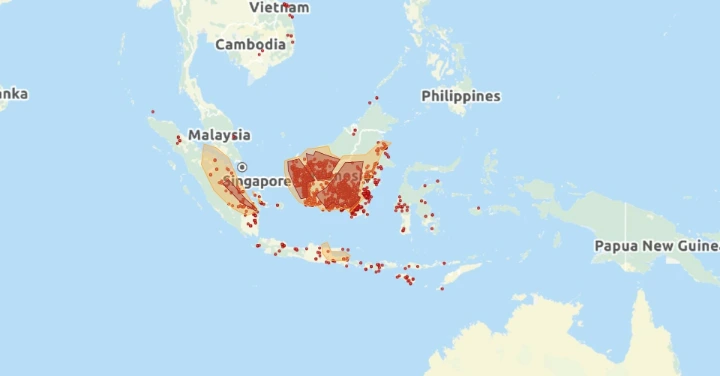
- The 24-hour PSI for overall air-quality conditions and health guidance
- The one-hour PM2.5 reading when planning immediate outdoor activities
- Official haze forecasts and health advisories from NEA
- Updates through the myENV mobile application
Check Singapore’s official haze portal for live readings before planning prolonged or strenuous outdoor activities.
Why Is PM2.5 Haze Particles the Main Health Concern During Haze?
- Eye, nose and throat irritation
- Coughing or wheezing
- Headaches or fatigue
- Shortness of breath
- Worsening of asthma and other respiratory conditions
Where outdoor exposure cannot be avoided, a properly selected and well-fitting particulate respirator can help reduce the inhalation of fine airborne particles.
Are 3-Ply Face Masks Suitable for Haze?
The respirator must seal properly against the face. Facial hair, an incorrectly adjusted nose bridge or loose straps can significantly reduce its effectiveness.
Safetyware Particulate Respirators for Haze Protection
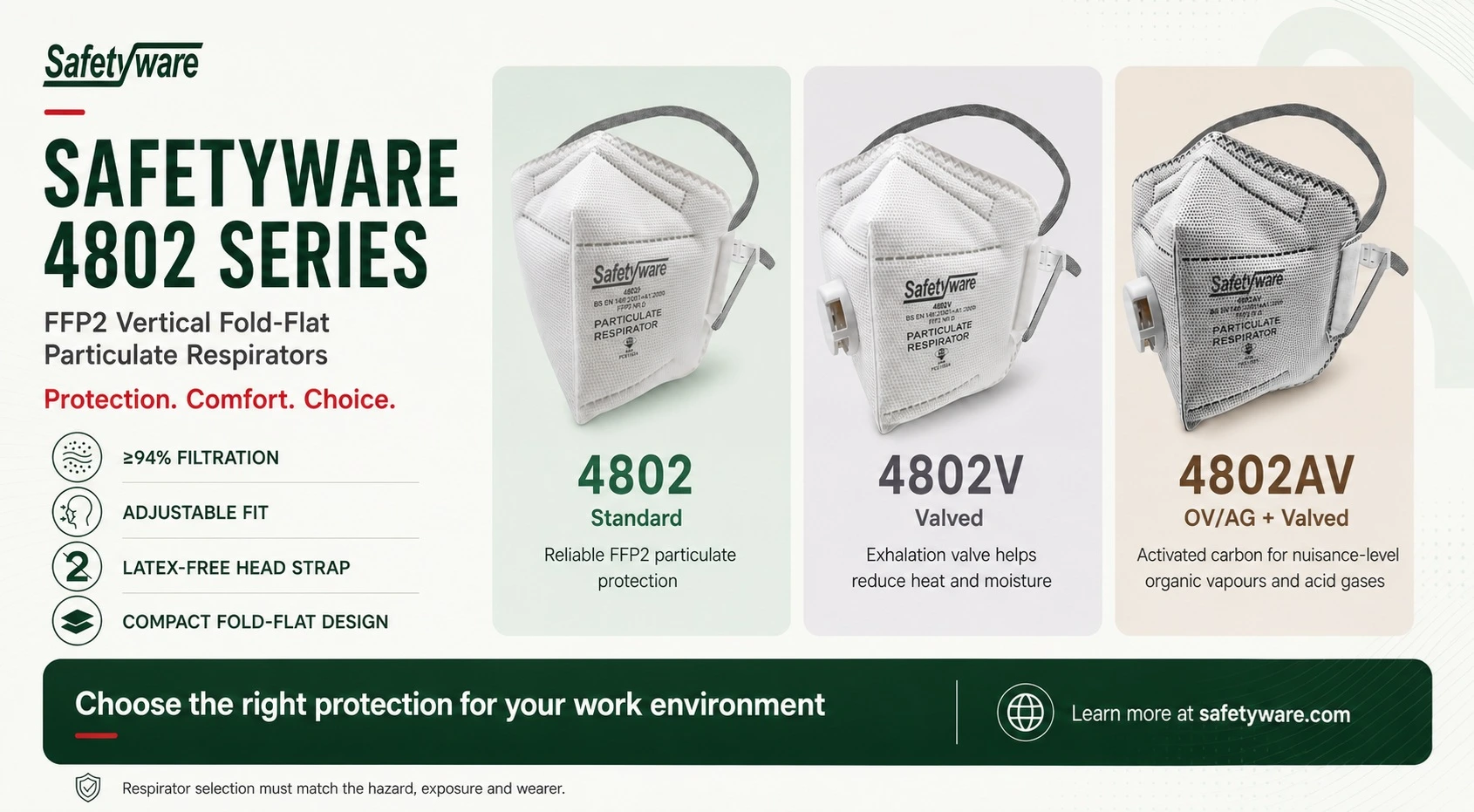
Safetyware 4802 Series: Fold-Flat Comfort for Daily Preparedness
- At least 94% filtration efficiency for 0.3-micron particles
- FFP2 protection, broadly comparable in filtration class to N95, KN95 and P2 respirators
- Protection against oil and non-oil particulate aerosols within its approved application
- Adjustable head-strap buckle for a personalised fit
- Concealed nose clip
- Cool, latex-free textile head strap
- Continuous-loop strap for convenient handling
- Contoured design compatible with many glasses and goggles
- Fold-flat construction for easy storage
The 4802 Series is a practical choice for commuters, outdoor personnel, maintenance teams and workplaces that want individually accessible respiratory protection during haze episodes.
Safetyware 8200 Series: Secure Fit and Long-Wear Comfort
- FFP2 NR classification
- Compliance with BS EN 149:2001+A1:2009
- High-efficiency melt-blown filtration media
- Patented adjustable head-strap buckle
- Soft polypropylene inner layer
- Pre-shaped nose cushion and soft nose foam
- Embossed fringe seal to support a secure fit
- Latex-free and metal-free construction
- Five-year shelf life from the manufacturing date when stored according to instructions
The 8200 Series is especially suitable for workplace respiratory-protection programmes in sectors such as construction, manufacturing, healthcare and general industry.
Safetyware 8800 Series: Versatile Vertical Fold-Flat Protection
- 8800: Standard FFP2 particulate respirator
- 8800V: FFP2 particulate respirator with an exhalation valve
- 8800CV: Valved particulate respirator with an activated-carbon layer for harmful particulates and nuisance-level organic vapours within its stated limitations
- At least 94% filtration efficiency
- Compliance with EN 149:2001+A1:2009
- Adjustable head-strap buckle for different facial sizes
- Concealed nose bridge with no exposed metal components
- Cool, latex-free textile head strap
- Staple-free construction
- Continuous-loop strap
- Smooth polypropylene inner and outer layers
- Compact fold-flat design
- Individual hygienic packaging
For haze particles alone, the standard non-valved model may be sufficient when it matches the wearer and risk assessment. Activated-carbon and combination models should only be selected where the stated additional protection is relevant. Particulate respirators do not generally protect against gases or vapours unless the specific product is designed and approved for that purpose.
| Safetyware series | Design | Notable features | Best suited for |
|---|---|---|---|
| 4802 Series | FFP2 vertical fold-flat | Adjustable head strap, concealed nose clip and glasses-compatible contour | Personal preparedness, commuting and general haze exposure |
| 8200 Series | FFP2 NR cup-style | Shaped nose cushion, soft foam, metal-free construction and secure fringe seal | Prolonged workplace use and structured respiratory-protection programmes |
| 8800 Series | FFP2 vertical fold-flat | Standard, valved and activated-carbon variants available | Workplaces that require greater flexibility for different working conditions |
Respirator selection should consider the hazard, exposure level, facial fit, working conditions and applicable workplace requirements.
The best respirator is not determined by filtration rating alone. Selection should also consider facial fit, exposure duration, working conditions, wearer health, applicable workplace requirements and whether any gases or vapours are present.
Employers should conduct an appropriate risk assessment and arrange fit testing, training and medical evaluation where required.
Need Help Choosing a Respirator?
Contact Safetyware today for product enquiries, bulk orders and workplace respiratory-protection solutions.
How to Wear a Particulate Respirator Correctly
- Inspect the respirator for damage, contamination or expired components.
- Position it over the nose, mouth and chin.
- Place and adjust the head straps without twisting them.
- Shape the nose area firmly against the face.
- Perform a user seal check before entering the affected area.
- Readjust the respirator if air leaks around the nose or edges.
- Replace it if it becomes damaged, soiled, wet or difficult to breathe through.
A respirator should not be worn over a beard or facial hair that crosses the sealing surface. Even a high-efficiency filter cannot provide its intended protection when contaminated air bypasses it through gaps.
Haze Preparation for Singapore Employers
- Monitoring the 24-hour PSI and one-hour PM2.5 readings
- Identifying employees and activities with higher exposure
- Setting clear criteria for reducing, rescheduling or stopping outdoor work
- Providing suitable respirators in appropriate sizes or models
- Conducting fit testing and wearer training where required
- Planning additional rest periods and access to cleaner indoor air
- Checking respirator stock, condition and expiry dates
- Communicating health precautions clearly to employees
Buying respirators only after the PSI reaches unhealthy levels can lead to shortages and rushed product selection. Advance preparation gives organisations time to assess fit, train employees and maintain adequate inventory.
Prepare Before Singapore’s Air Quality Changes
Contact Safetyware to discuss respirator selection, workplace requirements or bulk supply for your organisation.
Frequently asked questions
A well-fitting particulate respirator rated FFP2, N95 or an equivalent recognised standard is generally more suitable for filtering haze particles than a loose-fitting surgical mask. Correct fit is essential.
An FFP2 respirator is designed to filter airborne particles and provides at least 94% filtration efficiency under its prescribed laboratory test. Actual protection depends on correct selection, fit and use.
The 24-hour PSI reflects air quality over a longer period and is used for health advisories. The one-hour PM2.5 reading provides a more immediate indication of current fine-particle levels and can help users plan activities over the next few hours.
Models marked “NR” are non-reusable. Replace a disposable respirator when it becomes wet, damaged, dirty, difficult to breathe through or otherwise reaches the replacement condition stated by the manufacturer.
People with certain heart or respiratory conditions may find breathing through a respirator more difficult and should seek medical advice when appropriate. Employers should incorporate wearer suitability into their respiratory-protection programmes.
Editor’s note: Haze and air-quality conditions are time-sensitive. This article reflects official information available on 28 August 2026 and should be updated as new advisories are issued.