Singapore’s oil, gas, petrochemical, and marine sectors operate in challenging environments. Workers may encounter chemical splashes, hazardous particles, contaminated equipment, and demanding maintenance conditions.
Therefore, choosing suitable personal protective equipment remains essential for protecting workers and supporting safe operations.
The
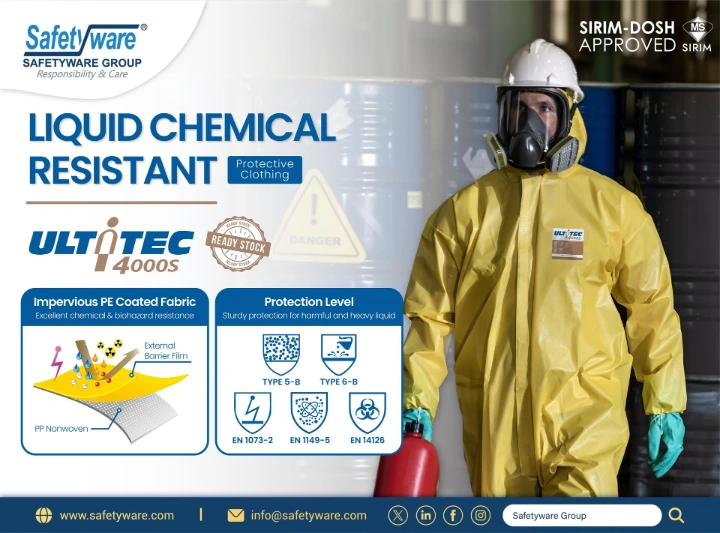
ULTITEC 4000S protective coverall provides a practical barrier against selected workplace contaminants. It combines chemical-resistant material, lightweight comfort, and several recognised European safety certifications.
As a result, it suits many industrial tasks involving limited liquid spray, hazardous dust, and contamination risks.
However, no protective coverall works for every hazard. Companies must first review their risk assessment, chemical Safety Data Sheet, exposure level, and required protection type.
What is the ULTITEC 4000S protective coverall?
ULTITEC 4000S is lightweight chemical-resistant protective clothing for hazardous industrial environments. It helps protect the wearer from selected liquid chemical sprays, dry particles, biological hazards, and radioactive particulates.
The coverall comes in yellow for easy identification. Moreover, available sizes range from S to 2XL, which helps companies equip different members of their workforce.
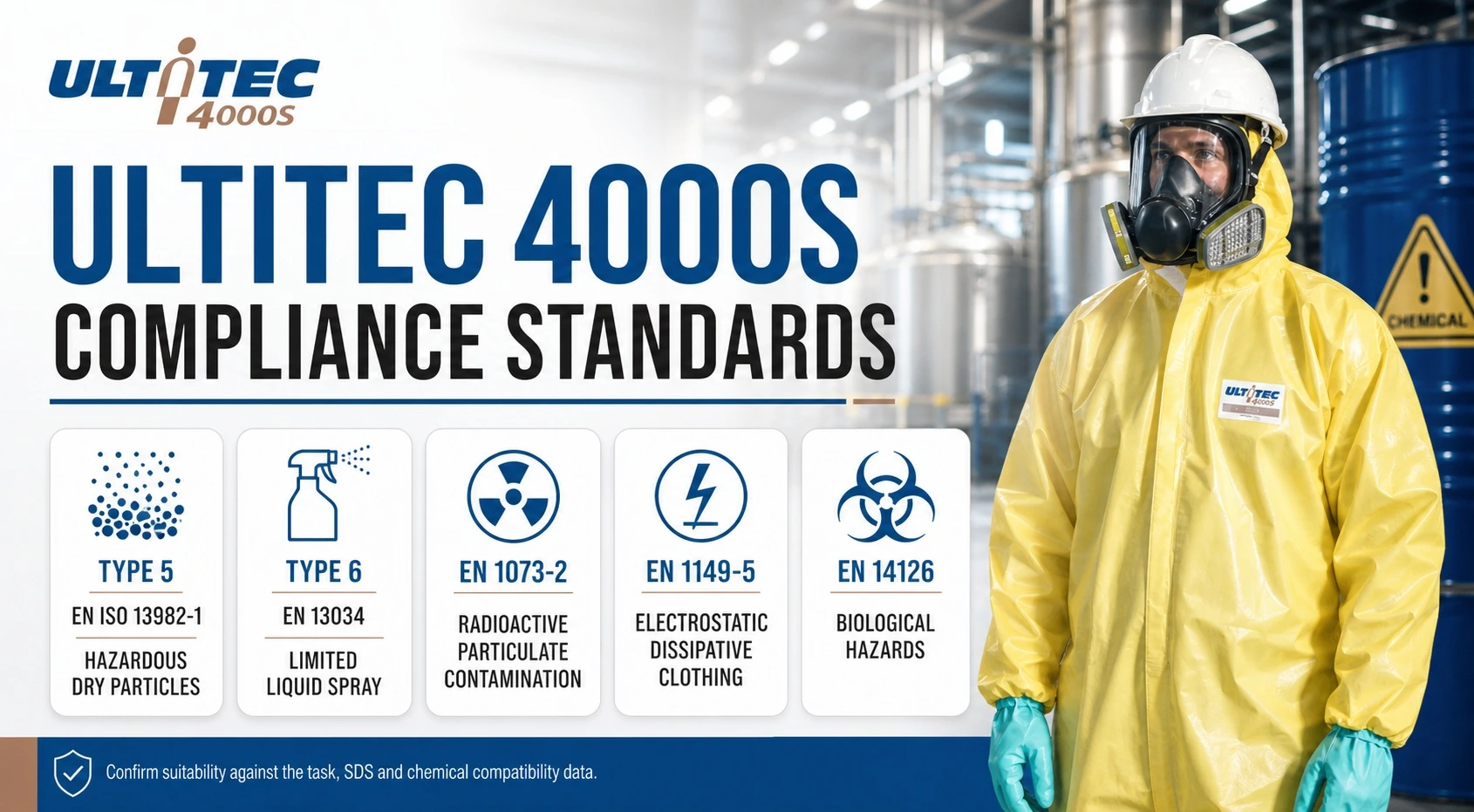
ULTITEC 4000S carries the following classifications and certifications:
- Type 5 under EN ISO 13982-1 for protection against hazardous dry particles.
- Type 6 under EN 13034 for limited protection against light liquid chemical sprays.
- EN 1073-2 for protection against particulate radioactive contamination.
- EN 1149-5 for electrostatic dissipative protective clothing.
- EN 14126 for protection against infectious agents and biological hazards.
Together, these properties make the coverall suitable for many maintenance, cleaning, inspection, and contamination-control activities.
Nevertheless, buyers should confirm the garment’s compatibility with the actual chemical before placing an order.
Why Singapore companies need suitable chemical protective clothing
Singapore hosts major refineries, petrochemical facilities, storage terminals, shipyards, laboratories, and waste-management operations. Many employees and contractors complete tasks around hazardous substances every day.
Chemical exposure can occur through inhalation, ingestion, injection, or absorption through the skin and eyes. Consequently, employers must control exposure before work begins.
Singapore’s Workplace Safety and Health Council recommends conducting a thorough risk assessment before employees work with chemicals. It also advises employers to maintain PPE in good working condition and provide proper training.
Additionally, Singapore’s risk-management framework requires employers, principals, and contractors to identify hazards and reduce workplace risks. These duties make careful PPE selection especially important.
PPE should support stronger controls instead of replacing them. Therefore, companies should first consider elimination, substitution, engineering controls, and safe work procedures.
Afterwards, suitable protective clothing can help address the remaining exposure risk.
Key benefits of the ULTITEC 4000S protective coverall
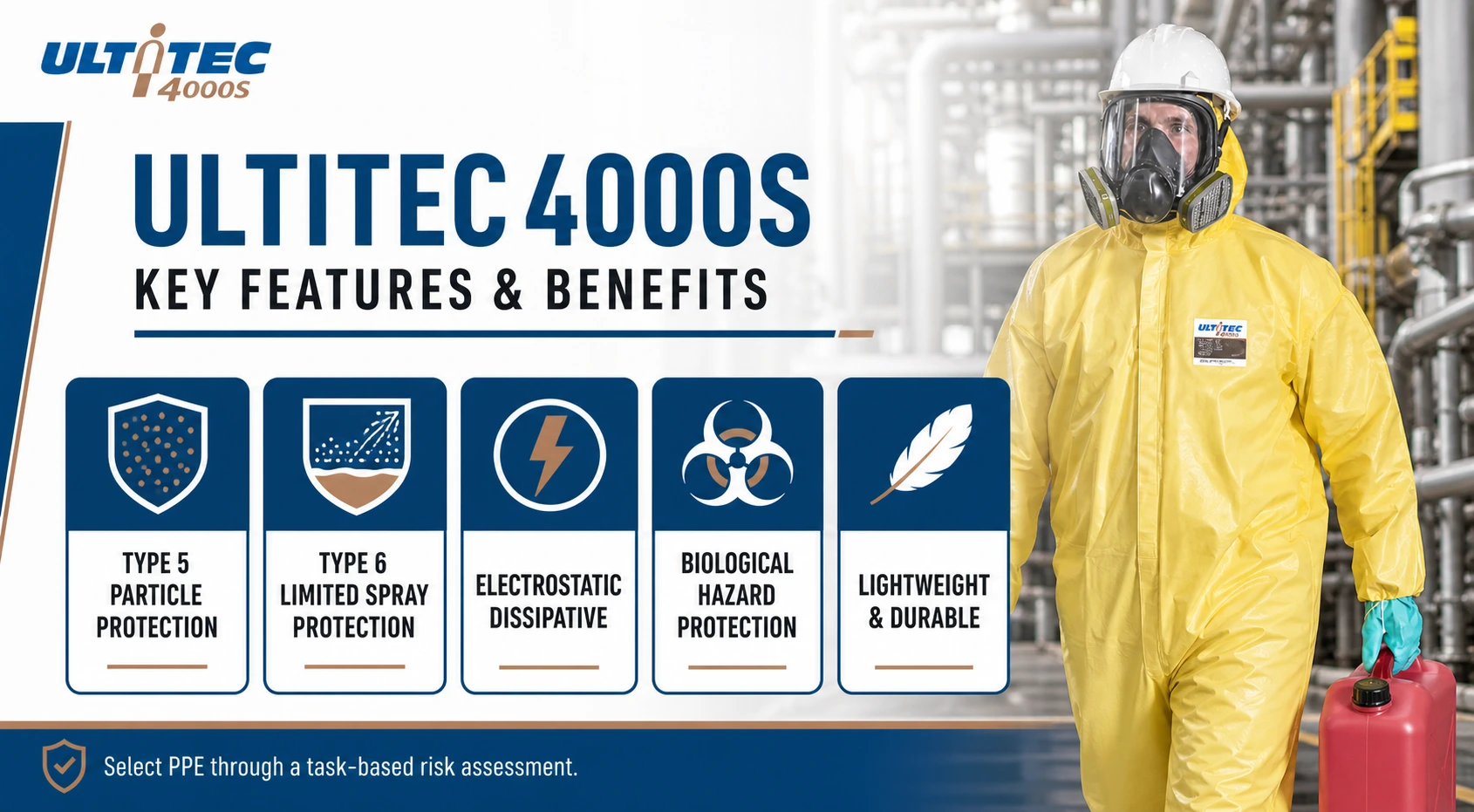
1. Protection against limited liquid chemical spray
Oil and gas workers may encounter splashes during equipment cleaning, sampling, chemical transfer, and maintenance. Therefore, a chemical-resistant coverall can provide an important barrier between the contaminant and the worker’s clothing or skin.
ULTITEC 4000S meets Type 6 requirements under EN 13034. This classification covers limited protection against light sprays of liquid chemicals.
However, Type 6 does not mean liquid-tight protection. A higher protection type may become necessary for pressurised jets, concentrated chemicals, prolonged contact, or major spills.
2. Barrier against hazardous dry particles
Dust and fine particles can arise during tank cleaning, catalyst handling, insulation work, and maintenance activities. Likewise, contaminated residue may become airborne when workers open or clean process equipment.
The coverall meets Type 5 requirements under EN ISO 13982-1. Therefore, it can support tasks that require protection from hazardous dry particles.
Companies should still assess respiratory hazards separately. A protective coverall does not replace a suitable respirator when airborne exposure requires respiratory protection.
3. Electrostatic dissipative properties
Static charge presents an important concern in workplaces containing flammable vapours or sensitive equipment. ULTITEC 4000S complies with EN 1149-5 for electrostatic dissipative clothing.
Consequently, this feature helps reduce static accumulation when workers use the garment under suitable conditions.
Nevertheless, antistatic performance requires proper grounding and a complete protective system. Furthermore, EN 1149-5 certification does not make the coverall flame-resistant.
Therefore, workers must not use ULTITEC 4000S as a substitute for flame-resistant clothing. Sites with flash-fire or flame hazards require separately assessed FR protection.
4. Lightweight comfort for demanding work
Singapore’s hot and humid climate can increase heat stress, especially during outdoor maintenance and shutdown work. Heavy garments may also restrict movement and cause discomfort.
In contrast, ULTITEC 4000S uses lightweight yet durable fabric. Therefore, workers can move more comfortably while completing inspections, cleaning, or routine maintenance.
Better comfort may also encourage correct PPE use. However, employers must still plan rest periods, hydration, ventilation, and heat-stress controls.
5. Protection against biological hazards
ULTITEC 4000S meets EN 14126 for protection against infectious agents. Thus, it can support selected work involving biological contamination.
Possible applications include waste handling, contaminated-area cleaning, wastewater operations, and biological spill response.
Even so, the risk assessment must consider exposure routes, garment interfaces, and required respiratory or facial protection.
6. Clear identification and practical sizing
The coverall’s yellow colour makes workers easier to identify within controlled work zones. Moreover, it helps supervisors distinguish protected personnel during maintenance or decontamination activities.
Sizes from S to 2XL also support a better fit across work teams. Correct sizing matters because an undersized garment may tear, while an oversized garment may snag.
Therefore, procurement teams should check the size chart before ordering a full carton or fitting a large workforce.
Why ULTITEC 4000S suits oil and gas operations
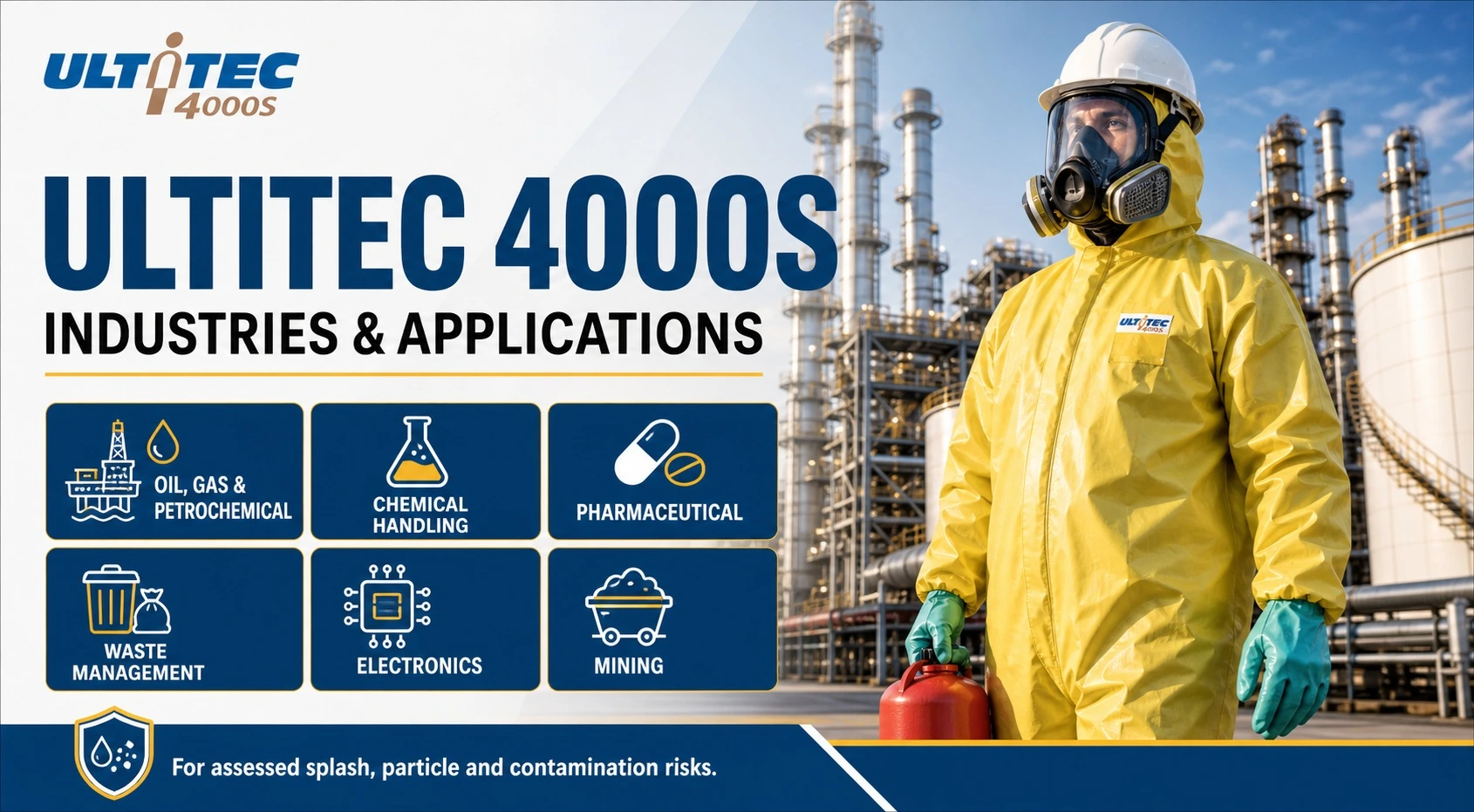
Singapore’s oil and gas sector includes refineries, petrochemical plants, tank farms, terminals, offshore support services, and marine facilities. These workplaces often combine chemical, particle, static, heat, and mechanical hazards.
ULTITEC 4000S may suit carefully assessed tasks such as:
- Routine plant maintenance around chemical residue.
- Equipment inspection in contaminated process areas.
- Tank and vessel preparation before specialist entry work.
- Cleaning of pipes, pumps, valves, and processing equipment.
- Handling selected process chemicals and contaminated materials.
- Managing limited chemical splashes during non-pressurised work.
- Shutdown and turnaround activities involving hazardous dust.
- Waste segregation and disposal within controlled areas.
- Emergency preparation for minor chemical leaks.
- Decontamination support after a controlled incident.
For example, maintenance teams may need protection while opening equipment that contains dry residue. Similarly, cleaning teams may face light splashes when washing contaminated surfaces.
In both situations, ULTITEC 4000S could provide an appropriate protective layer after a competent person confirms suitability.
However, oil and gas sites may also present flash-fire hazards. Since ULTITEC 4000S is not presented as flame-resistant clothing, teams must assess ignition hazards separately.
Other industries that can use ULTITEC 4000S
Although oil and gas operations represent a strong application, several other Singapore industries may benefit from this model.
Chemical manufacturing
Workers may require protection during mixing, cleaning, sampling, and equipment maintenance. However, buyers must verify chemical compatibility and expected contact conditions.
Pharmaceutical manufacturing
The coverall can help control particles and protect personnel during selected production, cleaning, or contamination-management tasks.
Waste and environmental services
Waste handlers may encounter chemical residue, hazardous particles, and biological contaminants. Therefore, a multi-hazard coverall can support properly controlled collection or disposal work.
Electronics manufacturing
Electronics facilities often require particle control and electrostatic risk management. Accordingly, the coverall’s Type 5 and EN 1149-5 properties may support selected industrial tasks.
Laboratories and research facilities
ULTITEC 4000S may support chemical spill preparation, decontamination, and higher-risk cleaning. Nevertheless, laboratories must select protection according to each chemical and procedure.
Mining and bulk-material handling
Workers may encounter hazardous mineral dust and chemical contaminants. Consequently, Type 5 particle protection can help during suitable operations.
How to select a chemical-resistant coverall
Start by identifying the chemical, concentration, physical form, and possible exposure route. Next, review the chemical’s SDS and available permeation or compatibility information.
Then, consider these questions:
Will workers face dust, mist, light spray, heavy spray, or a pressurised jet?
How long could the contaminant contact the garment?
Could workers face flames, sparks, radiant heat, or flash-fire hazards?
Does the task require sealed seams or liquid-tight protection?
Which gloves, boots, respirators, and eye protection must workers use?
Can workers don and remove the garment without spreading contamination?
How will the company handle contaminated garments after use?
Finally, conduct a wearer trial before bulk purchasing. The trial should check fit, mobility, PPE compatibility, visibility, and comfort under actual working conditions.
Safe use, inspection, and disposal
Inspect every coverall before use. Look for tears, punctures, open seams, damaged fasteners, discolouration, or signs of material deterioration.
Next, train workers to put on and remove the garment correctly. Poor removal techniques can transfer contaminants onto the skin, clothing, or surrounding surfaces.
Workers should also connect gloves, boots, respirators, and other PPE according to the site procedure. However, they must never tape garment interfaces without an approved method.
Treat the garment as limited-use protective clothing unless Safetyware and the site’s safety team confirm otherwise. Furthermore, replace any damaged or contaminated coverall promptly.
Finally, dispose of contaminated clothing according to the SDS, site rules, and applicable Singapore waste requirements.
Equip your Singapore workforce with suitable chemical protection
ULTITEC 4000S offers a strong combination of lightweight comfort, Type 5 particle protection, Type 6 limited-spray protection, and electrostatic dissipative performance.
Additionally, its EN 14126 certification supports selected biological-risk applications.
For Singapore’s oil, gas, petrochemical, marine, chemical, pharmaceutical, and waste sectors, this model can support a well-planned PPE programme.
However, correct selection remains essential. Always match the coverall to the chemical, exposure route, task, and complete workplace risk assessment.
For product suitability advice, sizing assistance, bulk-order pricing, or a quotation, contact our sales team:
Explore the ULTITEC 4000S protective coverall or contact Safetyware for further assistance.
Frequently asked questions
ULTITEC 4000S provides Type 5 protection against hazardous dry particles and Type 6 limited protection against light liquid chemical sprays.
It also meets EN 1073-2, EN 1149-5, and EN 14126 requirements.
Yes, it may suit assessed maintenance, cleaning, inspection, particle-control, and limited chemical-splash tasks.
However, the safety team must verify chemical compatibility and all site hazards before use.
No flame-resistant certification appears in the stated product specifications. Therefore, do not use it as a replacement for certified FR clothing.
Always assess flash-fire, spark, and flame hazards separately.
Type 6 provides limited protection against light sprays. Therefore, it may not suit major spills, pressurised jets, or prolonged chemical contact.
A higher protection type may become necessary.
ULTITEC garments generally serve as single-use protective clothing to reduce cross-contamination. Consequently, workers should replace garments after contamination, damage, or exposure.
Follow the manufacturer’s instructions and site disposal procedure.
Compare each worker’s measurements with the manufacturer’s size chart. Additionally, allow enough room for movement and any approved clothing worn underneath.
A wearer trial can confirm comfort and compatibility.
Singapore companies can contact Safetyware for product information, sizing guidance, suitability checks, quotations, and bulk-order support.
Use the sales contact above or visit the ULTITEC 4000S product page.