Eyewash & eye/face wash
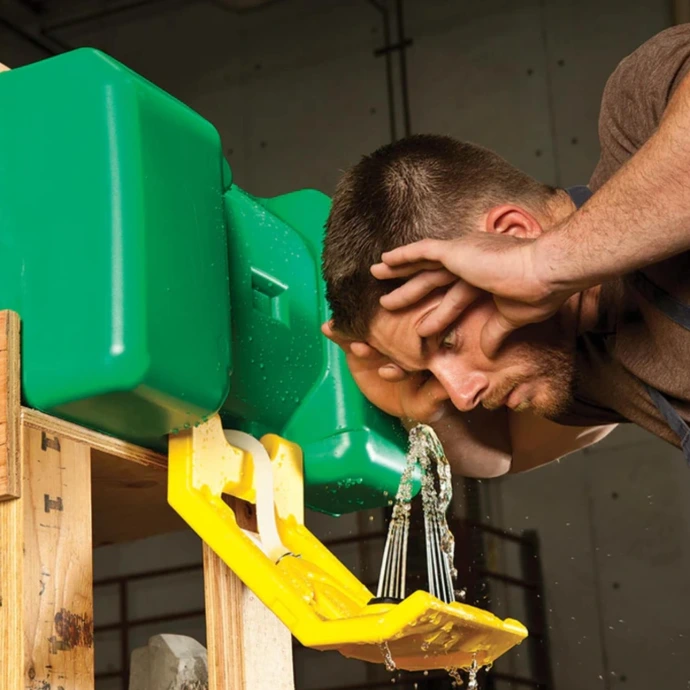
Focused flushing for the eyes or a broader spray pattern for the eyes and surrounding face.
Emergency eyewash, eye/face wash, drench shower and combination equipment for laboratories, production areas, chemical stores, battery rooms and industrial workplaces across Singapore.
Select equipment according to the likely exposure area, water availability, workplace layout and the substances identified in the risk assessment and Safety Data Sheets.
Focused flushing for the eyes or a broader spray pattern for the eyes and surrounding face.
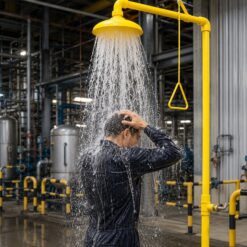
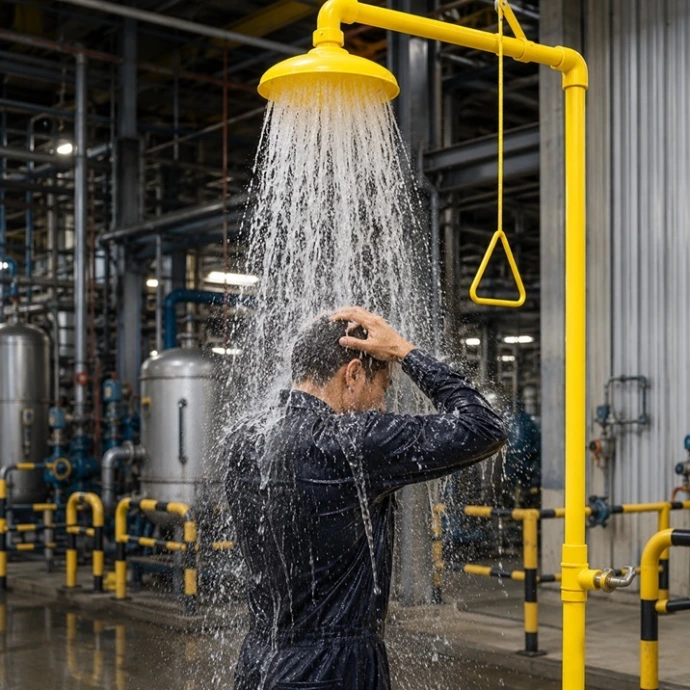
High-volume flushing where hazardous material could contact larger areas of the body.
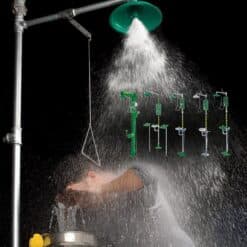
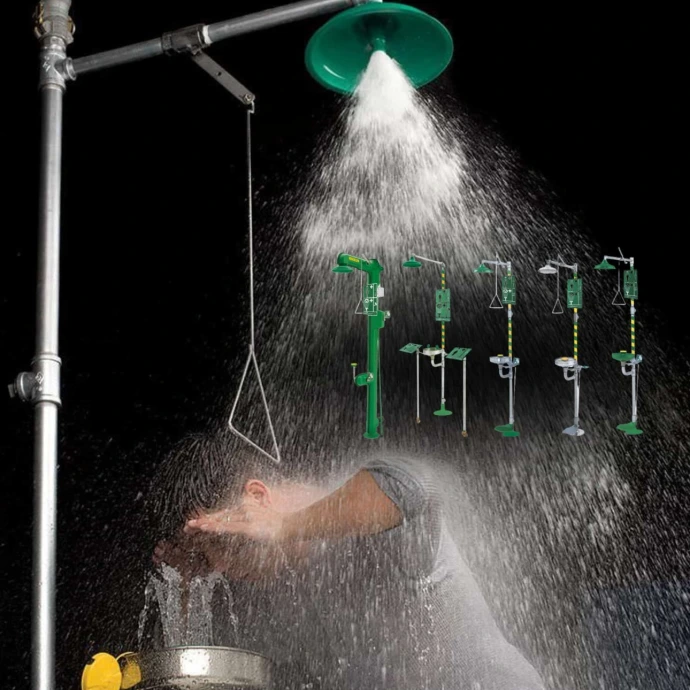
Integrated eyewash and shower equipment for locations with both eye/face and body exposure risks.
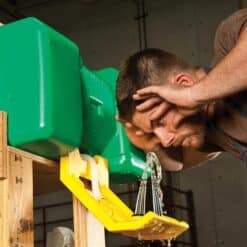
Self-contained flushing for temporary, mobile or remote areas without a suitable plumbed supply.
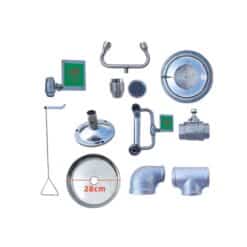
Replacement bowls, spray heads, valves, signs and components for ongoing equipment upkeep.
Use the SDS and risk assessment to identify corrosive, toxic or severely irritating substances and the likely routes of exposure.
Choose eyewash for eye exposure, eye/face wash for broader facial exposure, and a shower or combination unit where the body may be affected.
Locate equipment nearby along a clearly marked, unobstructed route that remains practical for an injured person to reach.
Account for activation checks, clean flushing fluid, inspection records, drainage, replacement parts and staff familiarity.
Singapore MOM guidance states that workplaces using toxic or corrosive chemicals must provide nearby eyewash stations or water facilities for quick flushing where accidental eye or body contact may occur.
It is needed where accidental exposure could place a hazardous, toxic or corrosive substance in a worker's eyes. The hazard assessment and SDS should guide the decision.
Eyewash equipment focuses flushing on both eyes. Eye/face wash equipment provides a broader pattern that also covers the surrounding face.
A combination unit is suited to areas where an incident could expose both the eyes or face and larger areas of the body.
Portable units can support locations without a suitable plumbed supply, provided the flushing fluid, capacity, inspection, preservation and servicing arrangements suit the identified hazard.
Emergency eyewash, eye/face wash, drench shower and combination equipment for laboratories, production areas, chemical stores, battery rooms and industrial workplaces across Singapore.
Select equipment according to the likely exposure area, water availability, workplace layout and the substances identified in the risk assessment and Safety Data Sheets.
Focused flushing for the eyes or a broader spray pattern for the eyes and surrounding face.
High-volume flushing where hazardous material could contact larger areas of the body.
Integrated eyewash and shower equipment for locations with both eye/face and body exposure risks.
Self-contained flushing for temporary, mobile or remote areas without a suitable plumbed supply.
Replacement bowls, spray heads, valves, signs and components for ongoing equipment upkeep.
Use the SDS and risk assessment to identify corrosive, toxic or severely irritating substances and the likely routes of exposure.
Choose eyewash for eye exposure, eye/face wash for broader facial exposure, and a shower or combination unit where the body may be affected.
Locate equipment nearby along a clearly marked, unobstructed route that remains practical for an injured person to reach.
Account for activation checks, clean flushing fluid, inspection records, drainage, replacement parts and staff familiarity.
Singapore MOM guidance states that workplaces using toxic or corrosive chemicals must provide nearby eyewash stations or water facilities for quick flushing where accidental eye or body contact may occur.
It is needed where accidental exposure could place a hazardous, toxic or corrosive substance in a worker's eyes. The hazard assessment and SDS should guide the decision.
Eyewash equipment focuses flushing on both eyes. Eye/face wash equipment provides a broader pattern that also covers the surrounding face.
A combination unit is suited to areas where an incident could expose both the eyes or face and larger areas of the body.
Portable units can support locations without a suitable plumbed supply, provided the flushing fluid, capacity, inspection, preservation and servicing arrangements suit the identified hazard.