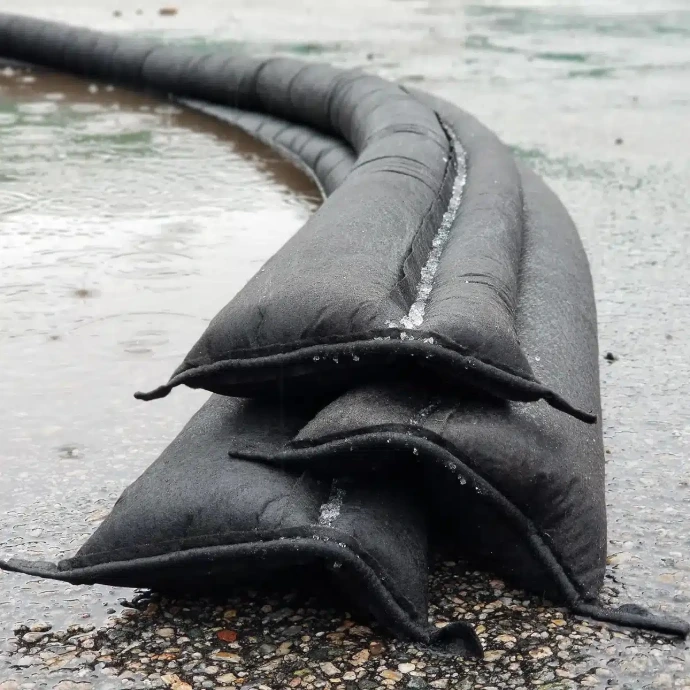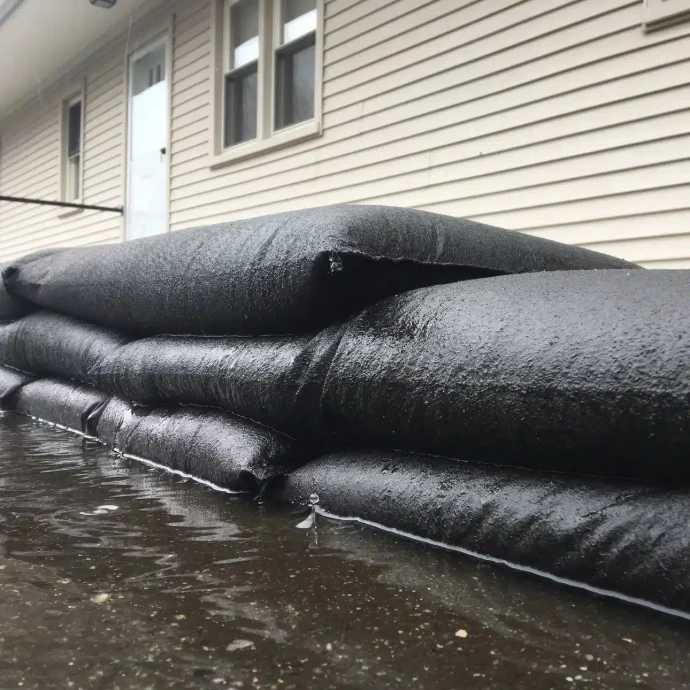
5 ft flood barrier
A compact barrier length for doorways, corridors and smaller vulnerable openings.
Portable flood barriers and water-activated flood bags for entrances, loading areas, basements, storerooms, equipment rooms and other vulnerable locations in Singapore.
Product selection depends on the opening width, expected water depth, surface condition, available response time, deployment manpower and the wider drainage and emergency plan.
A compact barrier length for doorways, corridors and smaller vulnerable openings.
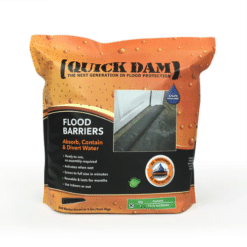
A longer barrier for wider entrances, loading areas and temporary water diversion.
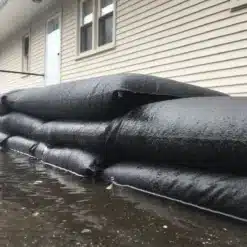
Compact water-activated bags for low openings, seepage points and rapid temporary response.
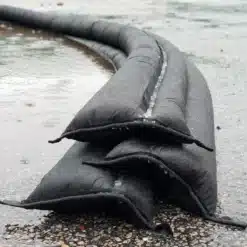
Deployable barriers that expand on contact with water to help contain or divert floodwater.
Record doors, gates, ramps, loading bays, vents, service penetrations, drains and routes leading to basements or critical rooms.
Check clear opening width, threshold and wall conditions, ground slope, surface type, obstructions and expected water depth.
Define the flood-warning trigger, storage location, transport route, manpower, installation sequence and target deployment time.
Keep drainage clear, check products and seals, practise the operating procedure and replace damaged or expired components.
PUB guidance encourages vulnerable homes and businesses to keep drainage systems clear, maintain flood barriers in good working condition and prepare for safe response during flash-flood conditions.
Measure the clear width at several heights and record the threshold, wall material, obstructions, slope and surrounding surface. Include photographs or drawings when assessing the location.
Reusability depends on the specific product, exposure, contamination, drying process and manufacturer instructions. Inspect every unit before storage or reuse.
Not necessarily. Water may enter through secondary doors, vents, service openings, drains or basement routes. The assessment should cover the whole premises.
Include activation triggers, responsible personnel, product storage, transport, installation sequence, safety precautions, inspection, removal, cleaning and post-event reporting.
Portable flood barriers and water-activated flood bags for entrances, loading areas, basements, storerooms, equipment rooms and other vulnerable locations in Singapore.
Product selection depends on the opening width, expected water depth, surface condition, available response time, deployment manpower and the wider drainage and emergency plan.
A compact barrier length for doorways, corridors and smaller vulnerable openings.
A longer barrier for wider entrances, loading areas and temporary water diversion.
Compact water-activated bags for low openings, seepage points and rapid temporary response.
Deployable barriers that expand on contact with water to help contain or divert floodwater.
Record doors, gates, ramps, loading bays, vents, service penetrations, drains and routes leading to basements or critical rooms.
Check clear opening width, threshold and wall conditions, ground slope, surface type, obstructions and expected water depth.
Define the flood-warning trigger, storage location, transport route, manpower, installation sequence and target deployment time.
Keep drainage clear, check products and seals, practise the operating procedure and replace damaged or expired components.
PUB guidance encourages vulnerable homes and businesses to keep drainage systems clear, maintain flood barriers in good working condition and prepare for safe response during flash-flood conditions.
Measure the clear width at several heights and record the threshold, wall material, obstructions, slope and surrounding surface. Include photographs or drawings when assessing the location.
Reusability depends on the specific product, exposure, contamination, drying process and manufacturer instructions. Inspect every unit before storage or reuse.
Not necessarily. Water may enter through secondary doors, vents, service openings, drains or basement routes. The assessment should cover the whole premises.
Include activation triggers, responsible personnel, product storage, transport, installation sequence, safety precautions, inspection, removal, cleaning and post-event reporting.