
However, health authorities have found no evidence that the current infections cause more severe illness than usual. Therefore, the public should remain alert without becoming alarmed.
Influenza can spread quickly at workplaces, schools, public transport hubs, healthcare facilities, and crowded indoor venues. Moreover, infected people may pass the virus to others through respiratory droplets and particles.
Fortunately, several practical measures can help reduce transmission. These measures include vaccination, responsible masking, good hand hygiene, improved ventilation, and staying home when unwell.
This guide explains the current situation and the recommended precautions. Additionally, it shows how the SAFETYWARE 3-Ply Medical Face Mask can support everyday respiratory hygiene.
What is the current flu situation in Singapore?
Read the complete updates from Singapore’s Ministry of Health and Channel NewsAsia (CNA).
Why has the updated flu vaccine been delayed?
The new timeline represents a delay of approximately two weeks. According to MOH, an industry-wide development delay caused the revised schedule.
The updated vaccine includes two strain changes that follow World Health Organization recommendations. Consequently, authorities prefer this formulation for the upcoming Northern Hemisphere influenza season.
That season generally runs from October to March. Therefore, people at higher risk should discuss suitable vaccination timing with a qualified healthcare professional.
The higher-risk groups include adults aged 65 and above. They also include children aged six months to under five years and people with underlying medical conditions.
People in these groups may receive the 2026 Southern Hemisphere vaccine for interim protection if they have not received it. However, they should consult their healthcare provider first.
They should still receive the updated Northern Hemisphere vaccine when supplies arrive. Moreover, MOH recommends a minimum eight-week interval between the two doses.
People who already received the Southern Hemisphere vaccine should wait for the updated formulation. Again, a healthcare professional can provide advice based on individual health needs.
What can you do while flu activity remains elevated?
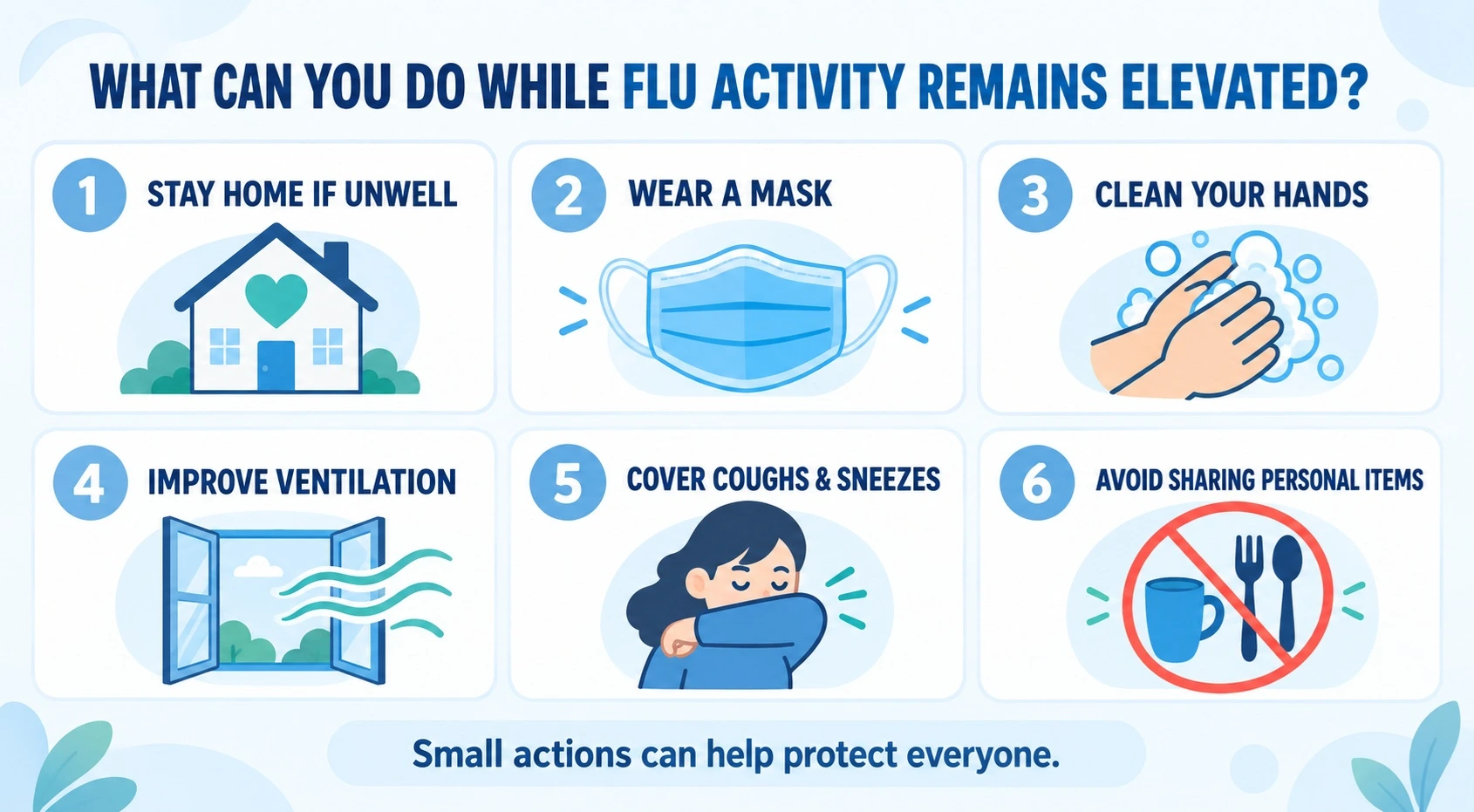
1. Stay home when you feel unwell
If symptoms become severe, prolonged, or worse, contact a doctor. Additionally, medically vulnerable people should seek medical advice promptly.
2. Wear a mask when leaving home becomes necessary
Moreover, symptomatic individuals should avoid crowded places and contact with medically vulnerable people. Responsible masking can help contain droplets released during talking, coughing, or sneezing.
However, a medical mask cannot guarantee protection against influenza. Instead, use it alongside vaccination, ventilation, hand hygiene, and responsible behaviour.
3. Clean your hands regularly
Alternatively, use a suitable alcohol-based hand sanitiser when soap and water remain unavailable. Also, avoid touching your eyes, nose, and mouth with unclean hands.
4. Improve indoor ventilation
For example, open windows or doors where doing so remains safe. Building managers can also maintain ventilation systems and review airflow in shared areas.
5. Cover every coughs and sneezes
Alternatively, cough or sneeze into your elbow instead of your hands. This practice reduces the chance of contaminating frequently touched surfaces.
6. Avoid sharing personal items
These surfaces may include door handles, counters, phones, switches, and shared equipment. Nevertheless, surface cleaning should complement respiratory precautions, not replace them.
Support everyday hygiene with the SAFETYWARE 3-Ply Medical Face Mask
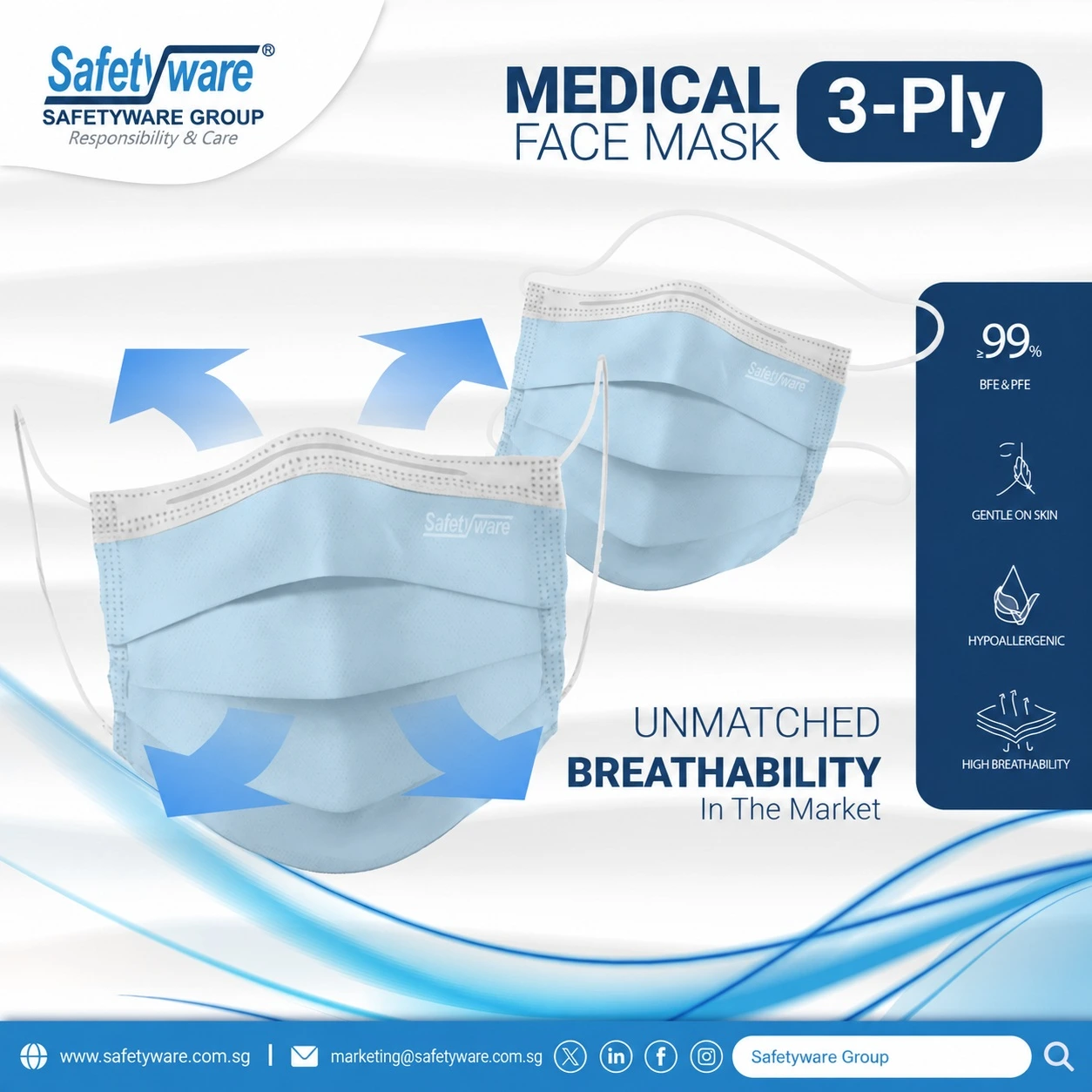
The SAFETYWARE 3-Ply Medical Face Mask uses a premium meltblown filter. According to Safetyware’s product information, the mask provides at least 99% Bacterial Filtration Efficiency.
Additionally, the mask meets the EN 14683 Type IIR standard. Its fluid-resistant outer layer helps provide a barrier against splashes.
Meanwhile, soft non-woven polypropylene layers support breathability and comfort. The adjustable nose strip also helps wearers achieve a better fit around the nose.
The mask comes in an adult size of 17.5 by 9.5 centimetres. Furthermore, Safetyware supplies 50pcs disposable masks in each box.
These masks can support hygiene in healthcare, dental, laboratory, food-processing, workplace, travel, and everyday settings. However, users must select respiratory protection according to the specific environment and risk.
Medical face masks mainly support hygiene, droplet control, and general face-covering needs. Therefore, workplaces with dust, fumes, chemicals, or hazardous airborne exposure may require certified respirators.
Safety managers should conduct a proper workplace risk assessment before choosing protective equipment. Additionally, they should seek technical advice whenever the correct protection level remains unclear.
A filtration test result does not guarantee that a wearer will avoid infection. Nevertheless, a quality medical mask can form one useful part of a broader prevention plan.
View the SAFETYWARE 3-Ply Medical Face Mask and review its current specifications.
Learn More
How should you wear a 3-ply medical mask?
- Clean and dry your hands before touching the mask.
- Check the mask for damage, moisture, or contamination.
- Place the fluid-resistant coloured side outward.
- Cover your nose, mouth, and chin completely.
- Shape the nose strip gently around your nose.
- Check the sides and reduce visible gaps.
- Avoid touching the mask’s front surface during use.
- Replace the mask when it becomes damp, dirty, or damaged.
- Remove the mask using only the ear loops.
- Dispose of the used mask responsibly.
- Finally, clean your hands after removing it.
Never wash or reuse a disposable medical mask. Instead, replace it with a clean mask when necessary.
How can employers prepare for increased influenza activity?
For larger operations, Safetyware can support product selection and bulk purchasing enquiries. Businesses should provide the required quantity, delivery location, usage environment, and expected schedule.
Contact the SAFETYWARE sales team
Alternatively, submit an enquiry through the Safetyware contact page.
Frequently asked questions about influenza and face masks
However, authorities found no indication that the infections had become more severe than usual. People should continue following official health guidance and practical hygiene measures.
However, availability may differ among clinics. Therefore, contact your preferred healthcare provider before making a trip.
Therefore, these individuals should discuss vaccination and other preventive measures with a healthcare professional.
Additionally, minimise social contact and avoid crowded places. You should also avoid meeting seniors and other medically vulnerable individuals.
Therefore, combine masking with vaccination, hand hygiene, ventilation, cough etiquette, and responsible behaviour.
Its fluid-resistant outer layer, soft inner materials, adjustable nose strip, and breathable design support practical everyday use.
Never wash a disposable medical mask. Instead, dispose of it responsibly and clean your hands afterward.
Stay prepared without panic
Sources: Singapore Ministry of Health, Channel NewsAsia, Malay Mail, and Safetyware product information.