
跳至内容

PPE for the Shipping Industry in Singapore: A Practical Safety Guide

Essential Protection for Shipboard, Port and Marine Operations
2026年8月17日
PPE for the Shipping Industry in Singapore: A Practical Safety Guide
SAFETYWARE (SG) PTE LTD
Singapore is one of the world’s busiest maritime centres. Every day, seafarers, port personnel, marine engineers, contractors and shipyard teams work around moving vessels, suspended loads, heavy machinery, hazardous substances and open water.

These environments demand more than a standard set of safety gear. The right personal protective equipment (PPE) depends on the vessel, work location, cargo, weather, task and residual risk after stronger controls have been applied.

This guide explains the essential PPE used across Singapore’s shipping and marine industries—and how employers can select, use and maintain it effectively.

What PPE is needed in the shipping industry?

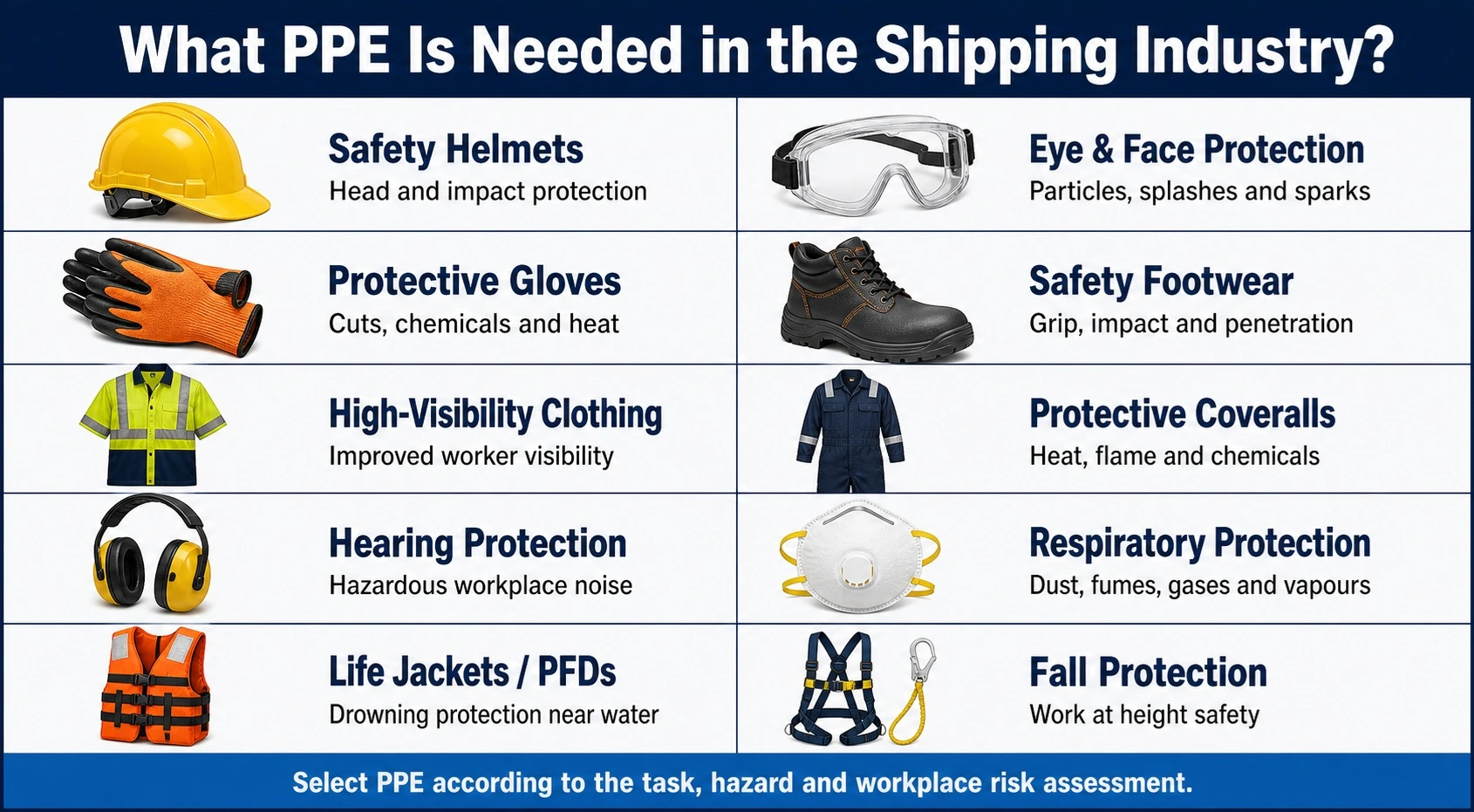
Common maritime and shipping PPE includes:
🔵 Industrial safety helmets
🔵 Safety glasses, goggles and face shields
🔵 Protective gloves selected for the task
🔵 Slip-resistant safety shoes or boots
🔵 High-visibility clothing
🔵 Coveralls and chemical- or flame-resistant clothing
🔵 Hearing protection
🔵 Respiratory protective equipment
🔵 Life jackets or other suitable personal flotation devices
🔵 Full-body harnesses and compatible fall-protection equipment
🔵 Welding shields and specialised hot-work PPE

Not every worker needs every item. PPE should be specified through a task-specific risk assessment, not issued as a one-size-fits-all kit.
Why PPE matters in maritime work

Shipping combines several high-risk work environments. A person may move between a quayside, gangway, open deck, engine room, cargo hold and workshop in one shift. Each area presents different hazards, including:
⚠️ Falling objects and suspended cargo
⚠️ Slips on wet, oily or uneven surfaces
⚠️ Falls from gangways, ladders, decks or elevated structures
⚠️ Falling overboard and drowning
⚠️ Moving vehicles, cranes, winches and mooring equipment
⚠️ Pinch points, sharp edges and wire ropes
⚠️ Excessive noise and vibration
⚠️ Welding arc, sparks, hot metal and fire
⚠️ Fuels, solvents, cleaning chemicals and hazardous cargo
⚠️ Dusts, fumes, gases and oxygen-deficient atmospheres
⚠️ Heat, rain, glare and prolonged sun exposure

PPE provides the last line of defence. It does not replace guarded machinery, safe access, ventilation, isolation, traffic control, permit-to-work systems, good housekeeping or competent supervision.

Singapore PPE requirements for marine and shipping work

Under Singapore’s workplace safety and health framework, employers must protect employees and people who may be affected by their work. This includes carrying out risk assessments, implementing effective controls, providing a safe work environment and giving workers adequate instruction, training and supervision. MOM summarises these duties in its guidance on WSH Act stakeholder responsibilities.

The Workplace Safety and Health (Risk Management) Regulations require workplace risks to be identified, assessed and controlled. MOM also advises businesses to cover routine and non-routine work and apply the hierarchy of control in its risk management guidance.

For work in a shipyard or aboard a ship in a harbour, regulation 52 of the Workplace Safety and Health (Shipbuilding and Ship-Repairing) Regulations 2008 specifically addresses eye, fall, foot, hand, head, hearing and respiratory protection. Where the work requires such protection, the employer or principal must provide and maintain the PPE so far as reasonably practicable.

The same regulations contain requirements covering matters such as permit-to-work systems, hot work, drowning hazards, slipping hazards, spray painting, welding and cutting, material handling and ventilation. PPE must therefore sit within the wider safe system of work.

The WSH Council’s WSH Manual for Marine Industries recommends selecting PPE according to the hazard and exposure, recognised standards, location of use and compatibility with other equipment. Site and vessel rules may impose additional requirements.


Essential maritime PPE by task and hazard

Work activity or hazardPPE to considerKey selection points
General deck, terminal or shipyard workHelmet, safety footwear, gloves, eye protection and high-visibility clothingImpact risk, grip, visibility, weather and site rules
Working beside or over waterSuitable life jacket or personal flotation device (PFD)Work activity, water conditions, freeboard, rescue plan and compatibility
Mooring and line handlingHelmet, gloves, safety footwear, high-visibility clothing and eye protection as assessedAvoid equipment that can snag; never rely on PPE to protect against snap-back forces
Cargo and container handlingHelmet, safety footwear, gloves, high-visibility clothing and eye protectionSuspended loads, vehicle movement, crush hazards and pinch points
Engine-room or machinery workHearing protection, eye protection, gloves, safety footwear and suitable workwearNoise, heat, oil, rotating equipment and entanglement risks
Welding, cutting or grindingWelding shield or suitable eye and face protection, flame-resistant clothing, welding gloves, safety footwear and hearing protectionArc rating or filter shade, sparks, hot metal, fumes and nearby workers
Painting, cleaning or chemical handlingChemical-resistant gloves and clothing, goggles or face shield, suitable footwear and respirator where requiredCheck the safety data sheet and manufacturer’s compatibility information
Work at heightFull-body harness and compatible fall-protection system where personal protection is requiredAnchorage, fall clearance, rescue, inspection and worker competency
Confined-space entryTask-specific PPE and respiratory protection where requiredAtmosphere, entry permit, ventilation, monitoring, communication and rescue
Hot outdoor workBreathable protective clothing, head and neck sun protection, and UV-rated eye protection where suitableHeat-stress plan, hydration, rest and compatibility with mandatory PPE

This table is a starting point only. A site-specific assessment must determine the final controls.

1. Safety helmets
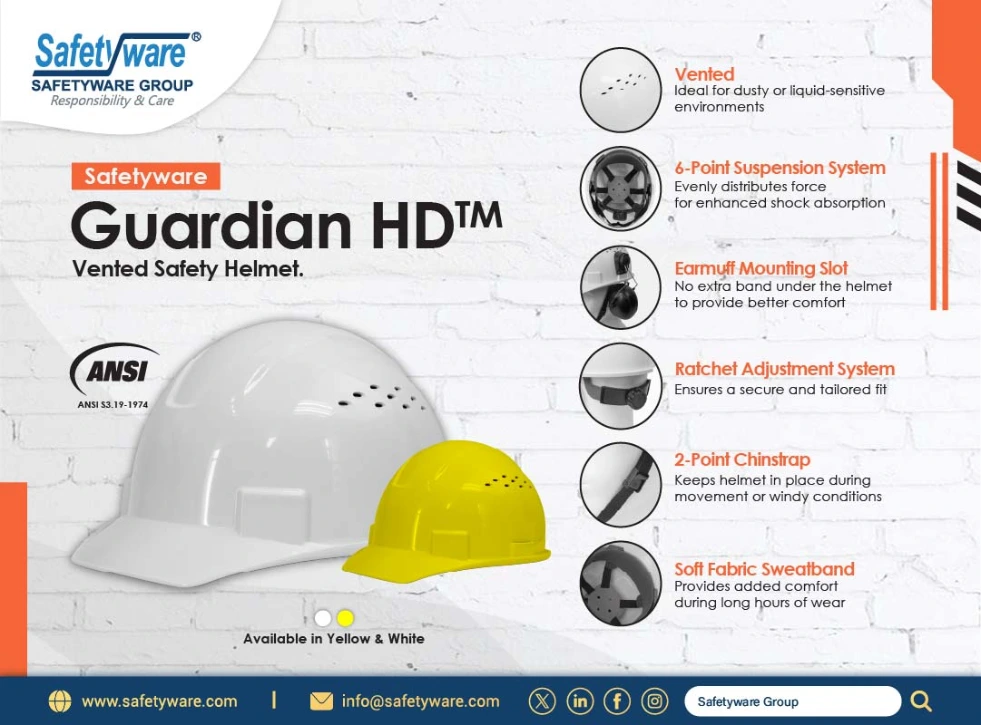
Safety helmets protect workers from falling tools, cargo-related impact, overhead structures and accidental contact with fixed objects.

Choose a safety helmet that:
- Meets the applicable site specification or recognised standard
- Has a secure, correctly adjusted suspension and chin strap where required
- Suits the impact and, if applicable, electrical hazards
- Accepts approved visors, earmuffs or other accessories without unauthorised modification
- Remains secure in wind, rain and awkward working positions

Inspect the shell, suspension, chin strap and fittings before use. Replace any helmet that has sustained a significant impact or shows cracks, brittleness, deformation or chemical damage, following the manufacturer’s instructions.

PPE for shipping industry workers at a Singapore port and vessel

2. Eye and face protection

Windblown debris, rust, wire strands, chemical splashes, grinding particles and welding radiation can cause serious eye injuries.

Basic safety spectacles may suit general impact risks. Sealed goggles can provide better protection from dust or liquid splash. Face shields add broader face coverage but generally supplement appropriate eye protection rather than replace it.

For welding and cutting, select the correct filter shade and protection for the process. Screens or barriers should also protect nearby workers from arc radiation and flying particles.

Anti-fog performance is especially important in Singapore’s hot, humid conditions. Workers should be able to see clearly when moving between air-conditioned spaces, engine rooms and outdoor decks.

3. Gloves for maritime tasks

No single glove protects against every shipping hazard. Match the glove to the work:
- General handling gloves for ropes, packaging and rough materials
- Cut-resistant gloves for sharp metal, edges, tools or wire rope
- Impact-resistant gloves for selected heavy handling tasks
- Chemical-resistant gloves for fuels, solvents, cleaners, paints or cargo residues
- Heat-resistant or welding gloves for hot work and heated components
- Disposable gloves for limited contamination-control tasks

For chemicals, check the safety data sheet and the glove manufacturer’s permeation, degradation and breakthrough information for the exact substance, concentration, temperature and exposure time.

Gloves can become an entanglement hazard near rotating machinery, winches and moving lines. The risk assessment and safe work procedure should define when gloves are suitable and when workers must keep their hands clear instead.


4. Slip-resistant safety footwear

Wet decks, oil, rainwater, steel surfaces and steep ladders make traction essential. Depending on the task, maritime footwear may also need:
- Protective toe caps
- Penetration-resistant midsoles
- Slip-resistant outsoles suited to the actual surface and contaminant
- Water-resistant materials
- Fuel-oil-resistant soles
- Electrical or antistatic properties appropriate to the hazard
- Secure ankle support and a comfortable fit for long shifts

Footwear does not remove the need for drainage, spill control, good housekeeping and properly maintained walking surfaces. Replace boots when the tread is worn, the upper separates or protective components are damaged.

5. High-visibility and protective clothing

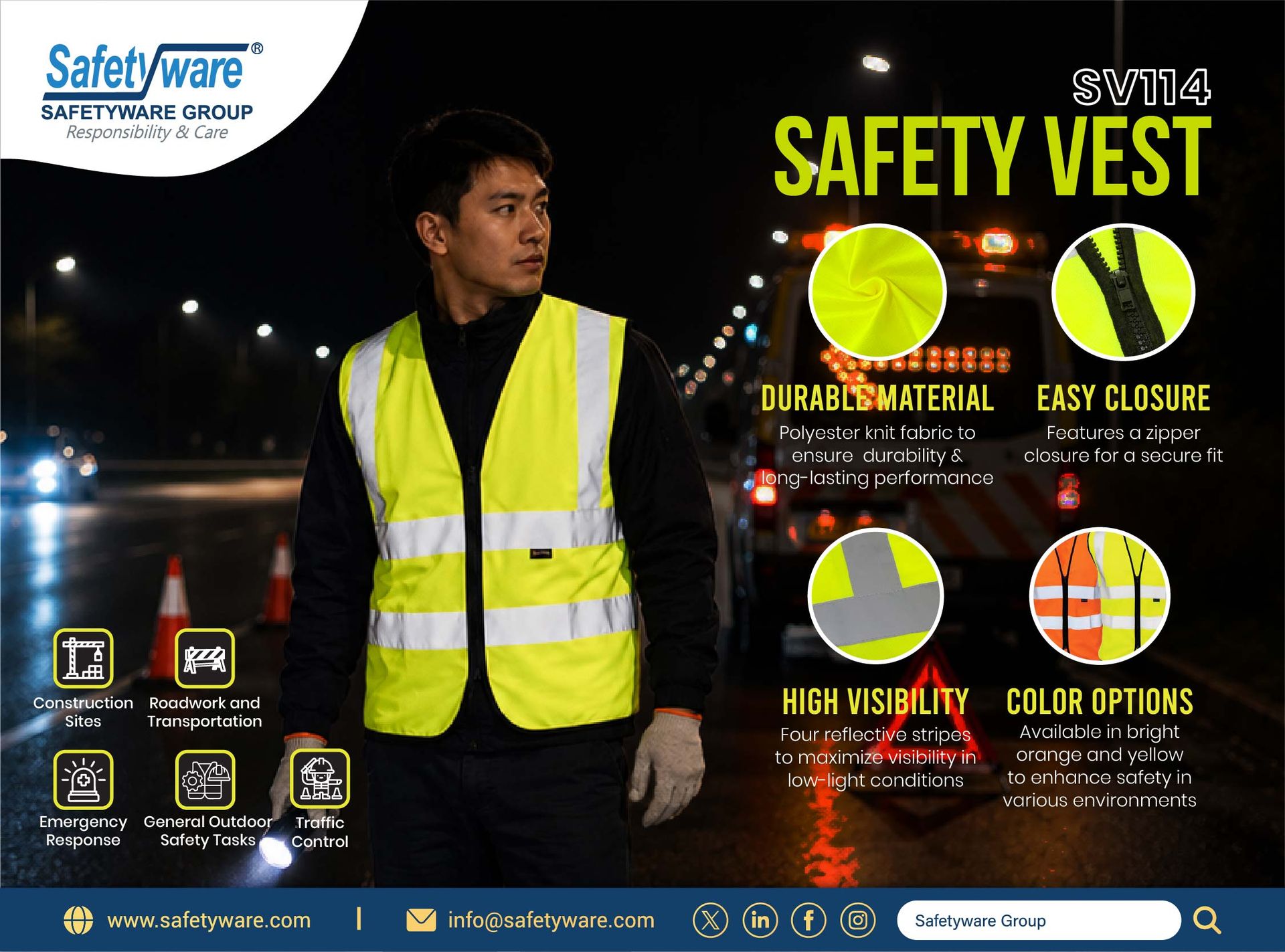
High-visibility clothing helps vehicle, crane and equipment operators see personnel in busy terminals and yards. Select the garment for daylight, low-light or night work and keep reflective areas clean and visible.

Standard coveralls protect skin and ordinary clothing from dirt and minor abrasion. More specialised work may require:
- Flame-resistant clothing for credible flash-fire or thermal risks
- Welding garments resistant to sparks and molten metal
- Chemical splash suits for specific substances
- Waterproof clothing for rain and washdown work
- Disposable coveralls for selected dust or contamination hazards

Loose clothing can catch on machinery or fittings. Garments should fit properly, close securely and remain compatible with the worker’s harness, life jacket, gloves and other PPE.
6. Life jackets and personal flotation devices

Workers exposed to a risk of falling into water may require a suitable life jacket or personal flotation device (PFD). This can include work from launches, barges, pontoons, small craft, quaysides, open deck edges or during vessel transfers.

Singapore’s WSH Council launched updated guidance in 2025 for workers operating in or near water. It recommends automatically inflated life jackets for activities where a person could fall into the water and emphasises selection, inspection, use and maintenance. See the WSH Council’s marine and maritime safety announcement and MPA’s maritime safety resources.

Selection should consider:
- Intended work and applicable maritime requirements
- Sheltered, harbour or open-water conditions
- Buoyancy and ability to turn an unconscious wearer
- Automatic or manual inflation method
- Compatibility with a harness, tool belt and other PPE
- Snagging, crushing, flame, welding or chemical hazards
- Visibility, lights, whistle and other required accessories
- Inspection, servicing and cylinder or inflator status

A life jacket helps manage drowning risk. It does **not** prevent a fall and does not replace guardrails, safe transfer arrangements or a fall-arrest system where those controls are required. A workable recovery and rescue plan is also essential.

7. Hearing protection

Engines, generators, ventilation systems, pumps, cargo equipment and power tools can produce hazardous noise. Noise should first be reduced through quieter equipment, enclosure, isolation, maintenance and exposure management.

Where hearing protection remains necessary, select earplugs or earmuffs using the noise assessment. Consider attenuation, comfort, communication, alarm audibility, hygiene and compatibility with helmets and eye protection. Excessive attenuation can reduce situational awareness.

Workers need fitting instruction, and reusable protectors require cleaning, inspection and timely replacement. Singapore businesses should follow applicable requirements and the WSH Council’s current [noise management resources.

8. Respiratory protection

Shipping and marine personnel may encounter welding fumes, paint mist, blasting dust, cargo dust, solvent vapours, exhaust or hazardous gases. A simple particulate mask cannot protect against every airborne contaminant.

Respirator selection must consider:
- Identity and concentration of the contaminant
- Exposure limit and duration
- Oxygen level and whether the atmosphere is known
- Particle, gas or vapour filter required
- Work rate, temperature and humidity
- Face fit and compatibility with other PPE
- Cartridge change schedules, cleaning and storage

Tight-fitting respirators require an effective facial seal and an appropriate fit-testing programme. Oxygen-deficient, immediately dangerous or unknown atmospheres require specialist controls and may require supplied-air equipment or self-contained breathing apparatus—not an air-purifying respirator.

9. Fall protection

Work on gangways, ladders, scaffolds, hatch covers and elevated structures can expose personnel to serious falls. Collective measures such as permanent platforms, guardrails, safe access and temporary edge protection should come first.

Where personal fall protection is required, a complete system may include a full-body harness, energy-absorbing lanyard or self-retracting lifeline, connectors and a suitable anchorage. These components must be compatible.

The plan must address fall clearance, swing falls, sharp edges, inspection and prompt rescue. A suspended worker can suffer serious harm even when the harness arrests the fall. Singapore’s WSH Council provides marine-specific materials through its work-at-height guidance.

10. Confined spaces and specialised operations

Cargo holds, tanks, void spaces, cofferdams and other enclosed areas may contain toxic or flammable substances, or have too little oxygen. Confined-space entry is not made safe by PPE alone.

Controls may include isolation, an entry permit, atmospheric testing, ventilation, continuous monitoring, a trained attendant, reliable communication and a rehearsed rescue arrangement. The PPE and respiratory equipment must follow the assessed atmosphere and work being performed. Refer to the WSH Council’s current confined-space resources.

Similarly, hot work, diving, fumigated cargo, dangerous goods and emergency response require specialist planning, competent personnel and equipment beyond a general maritime PPE set.

How to choose shipping PPE in Singapore

Use this practical process:
1. Map the job and location. Include vessel transfers, deck work, engine-room tasks, cargo operations, cleaning, maintenance and emergencies.
2. Identify the hazards. Review equipment, cargo information, safety data sheets, exposure monitoring, near misses and environmental conditions.
3. Apply higher-level controls first. Eliminate, substitute, isolate, guard or ventilate the hazard before relying on PPE.
4. Define the residual exposure. Record impact energy, chemical, concentration, noise, temperature, fall distance or water conditions.
5. Set performance requirements. Use applicable Singapore, vessel, port, flag-state and recognised international standards.
6. Check compatibility. Make sure helmets, eyewear, earmuffs, respirators, harnesses and life jackets work together.
7. Run wearer trials. Test fit, grip, movement, visibility, communication and thermal comfort in realistic conditions.
8. Train and supervise. Cover correct use, limitations, inspection, removal, cleaning, storage and emergency actions.
9. Maintain records and stock. Document issue, servicing, replacement and statutory or manufacturer inspections.

10. Review after change. Reassess following an incident, new cargo, new vessel, equipment change or deterioration in PPE performance.

Common maritime PPE mistakes

- Issuing the same glove for ropes, chemicals, welding and precision work
- Treating a life jacket as a replacement for fall prevention or rescue planning
- Using a particulate respirator for gases, vapours or oxygen-deficient spaces
- Wearing loose gloves or clothing near rotating machinery
- Combining accessories that compromise a helmet, respirator seal or harness
- Using damaged, waterlogged, contaminated or expired equipment
- Choosing hearing protection without assessing noise and communication needs
- Wearing a harness without checking the anchorage and fall clearance
- Purchasing PPE by price alone without wearer trials

- Training permanent staff but overlooking contractors, visitors or short-term crew

Maritime PPE inspection checklist

Before use, ask:
- Is this the correct PPE for the task, location and exposure?
- Does it fit the wearer and remain secure during movement?
- Is it compatible with every other item being worn?
- Is it clean, dry and free from cracks, cuts, corrosion or contamination?
- Are straps, buckles, seals, valves, cartridges and fasteners working?
- Is the product within its service life and required inspection date?
- For an inflatable life jacket, is the cylinder and activation mechanism ready?
- For fall protection, has the harness, connector, lifeline and anchorage been checked?
- Does the worker understand its limitations and the emergency procedure?

Remove defective equipment from service immediately and follow the manufacturer’s inspection and replacement instructions.

Frequently asked questions

Here are some common questions about PPE for shipping industry in Singapore.

Baseline PPE often includes a safety helmet, safety footwear, gloves, eye protection and high-visibility clothing. The risk assessment may add hearing protection, a respirator, protective clothing, a life jacket or fall-protection equipment for specific work.

Not for every task. A suitable life jacket may be required where workers face a risk of falling into water, subject to applicable legislation, vessel or port rules and the risk assessment. It must be correctly worn, inspected and supported by a rescue plan.

No. Rope handling, chemical handling, welding, sharp materials and machinery present different hazards. Select gloves for the specific task and check that they do not introduce snagging or entanglement risks.

No. An N95-type respirator filters selected particles; it does not protect against chemical gases or vapours and cannot supply oxygen. Respiratory protection must be selected for the identified contaminant and atmosphere.

Choose properly fitted safety footwear with an outsole proven suitable for the deck surface and likely contaminants. Toe, penetration, water, fuel-oil, heat or electrical protection may also be required. Good housekeeping and spill control remain essential.

There is no single replacement interval for all PPE. Inspect equipment before use and replace it when damaged, contaminated, expired, no longer fitting correctly or rejected under the manufacturer’s criteria. Certain products also require scheduled servicing or formal inspection.

Build a safer maritime PPE programme

Effective PPE selection begins with the job, not the product catalogue. When every item matches the hazard, wearer and work environment—and is supported by training, inspection and stronger controls—it can protect workers without creating unnecessary discomfort or new risks.

Safetyware supplies safety helmets, protective eyewear, task-specific gloves, safety footwear, protective clothing, hearing protection, respiratory protection, life jackets and fall-protection solutions for Singapore’s shipping, port and marine industries.

Contact Safetyware’s Singapore team to discuss your operations and identify suitable PPE for your crew, contractors and shore-based personnel.
📩
[email protected]
☎️
WhatsApp Us

Important: This article provides general information, not legal, vessel-specific or site-specific safety advice. Always follow current Singapore legislation, port and vessel rules, applicable flag-state and international requirements, safety data sheets, manufacturer instructions and a competent risk assessment.